




San Francisco – based data storage and management startup Databricks, this week, announced that it will pay $1.3 billion to acquire MosaicML, an open-source startup that enables businesses to build low-cost LLMs (large language models) with proprietary data. Its two models, MPT-7B and the recent release of MPT-30B, had 3.3 million downloads. The deal is expected to close during Databricks' second quarter ending July 31. "Every organization should be able to benefit from the AI revolution with more control over how their data is used. Databricks and MosaicML have an incredible opportunity to democratize AI and make the Lakehouse the best place to build generative AI and LLMs," said Ali Ghodsi, Co-Founder and CEO of Databricks. Databricks intends to combine its Lakehouse Platform with MosaicML's technology to offer customers a way to train and use LLMs with more control and ownership over how their data is used. According to MosaicML, "combined with near linear scaling of resources, multi-billion-parameter models can be trained in hours, not days, and it will cost thousands of dollars, not millions." Launched in 2021 and with a workforce of 62 employees today, MosaicML had raised $64 million from investors that included DCVC, AME Cloud Ventures, Lux, Frontline, Atlas, Playground Global, and Samsung Next. Companies like Anthropic and OpenAI license ready-made language models to businesses, which then build generative AI apps on top of them. MosaicML says they can offer similar AI models but at a lower cost and customize with a company’s data. The current cost of training a model on specialized data is estimated at $1 million to $2 million, according to experts.Those kinds of domain-specific models can be more useful for companies than building on top of the entire corpus of data that OpenAI.Large language models are becoming fine-tuned for very specific applications, and at that point, it is so small that they could be embedded into any cellphone. Some of those models using smaller, pre-trained models are already available in open-source libraries like those offered by machine-learning startup Hugging Face. .
A new GPT-3.5 turbo–powered app called Superchat allows users to chat with historical, fictional characters like Shakespeare, Einstein, or Cleopatra, and experts and representatives from different professions, like lawyers, chefs, or therapists. The company, Gorilla Technologies, has also created its own characters, like an assistant named Aria. The artwork for the characters was created using Midjourney. This chatbot can aid users with everyday tasks, like email writing or marketing expertise. "The goal is to make AI technology accessible to everyone, not just people who know how to write great prompts," explained Gorilla Technologies CEO Guglielmo Faglioni. "This app will be a great tool for kids who want to learn more about historical figures by chatting to cool characters like Shakespeare." The app is structured like a messaging app, allowing users to have multiple conversations with different AI chatbots at the same time. A number of the characters are available for free with the app download, while others can be unlocked through a premium subscription of $70/year. Like Superchat, other apps hoping to cash in the hype around AI chatbots are Quora's Poe, where users can now make their own bots using prompts, the Korean Typecast, or the Israeli D-ID.
Vimeo.com (NASDAQ:VMEO) announced this week it will be adding to its platform in July a suite of generative AI-powered video creation and editing tools that will include a script generator — including tone and duration —, a teleprompter, and a text-based video editor. "It will enable anyone to create a fully produced video in minutes by automatically generating scripts in seconds, recording videos in one take using a built-in teleprompter, and deleting any unwanted content such as filler words (ums and uhs) and long pauses," said the company. "These new capabilities have expansive applications, from quickly creating highlight reels to hosting virtual events or company meetings to exporting quote clips for short marketing videos, or simply cleaning up a high-profile video before sharing," said Ashraf Alkarmi, chief product officer at Vimeo. Alkarmi continues, “We’re clearly only scratching the surface of what AI can accomplish for organizations and the people within them." The capabilities will be free for anyone to trial as part of Vimeo’s subscription plan. https://iblnews.org/wp-content/uploads/2023/06/vimeo__one-take_video_creation_announcement-1080p.mp4
A Paris, France – based startup named Mistral AI, co-founded by alums from Google's DeepMind and Meta and created a month ago, has raised $113 million at a $260 million valuation. The round is led by Lightspeed Venture Partners, with Xavier Niel, JCDecaux Holding, Rodolphe Saadé, and Motier Ventures, in France; La Famiglia and Headline, in Germany; Exor Ventures, in Italy; Sofina in Belgium; and First Minute Capital and LocalGlobe, in the UK. French investment bank Bpifrance and former Google CEO Eric Schmidt are also shareholders. The goal of Mistral AI is to compete against OpenAI by creating open-source language models and generative AI solutions while focusing on enterprise, not consumers. "Open source is a core part of our DNA," CEO Arthur Mensch noted. It plans to release its first models for text-based generative AI in 2024. The founders are all in their early thirties and have known each other since school when they  were all studying across the field of artificial intelligence. [In the picture above, CEO Arthur Mensch (center), along with his co-founders Timothée Lacroix (CTO – L), and and Guillaume Lample (Chief Science Officer – R)] Guillaume Lample led the development of LLaMA, Meta’s Large Language Model, and he was leading the LLM team at Meta before he left to co-found Mistral AI. .
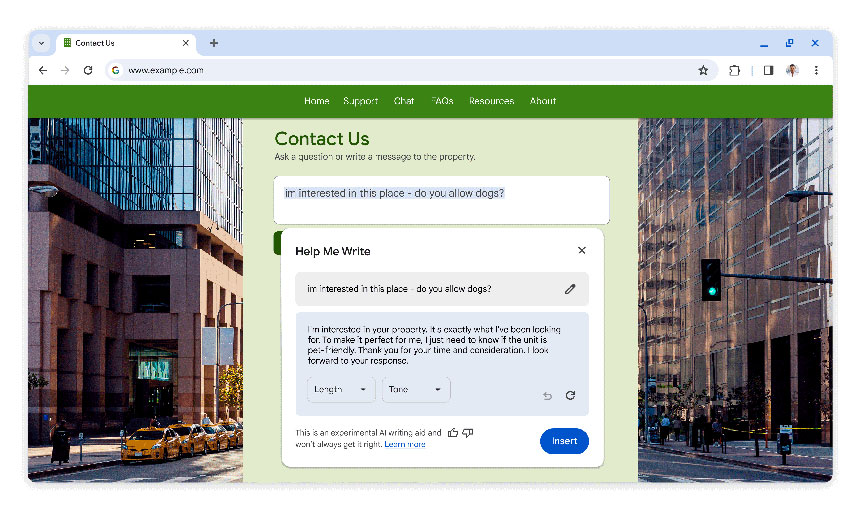
Automattic, the company behind WordPress.com, announced the availability of an AI tool called Jetpack AI Assistant for the customers of its hosted service. It integrates with the WordPress editor and is also available through the Jetpack plugin, allowing users to create, by adjusting the tone, unlimited posts, pages, structured lists and tables within a blog post, headlines, and translations in twelve languages. The assistant also offers better spelling and grammar correction features than WordPress’s built-in tools. Like ChatGPT, Jetpack AI Assistant utilizes a conversational system so content creators can chat with it in natural language. When writing a post or a page, users can add an AI Assistant block to their content. They type in a prompt, and the AI Assistant starts generating text. Automattic said that its AI Assistant, "still in the experimental phase, is free to use for all WordPress.com customers for a limited time." It added: "Activate the block with the Inserter or the “/” command shortcut. (If you didn’t know, here’s a fun tip: Hit the “/” button while in the post or page editor and type the name of the block you’re looking for. In this case, it would be “AI.”)." According to TechCrunch, Jetpack AI Assistant block will let users send 20 requests as a free trial. After that, they have to pay $10 per month to access the feature. In the last months, Google Docs, Microsoft Word, Notion, and Grammarly have introduced AI-powered writing tools into their apps. .