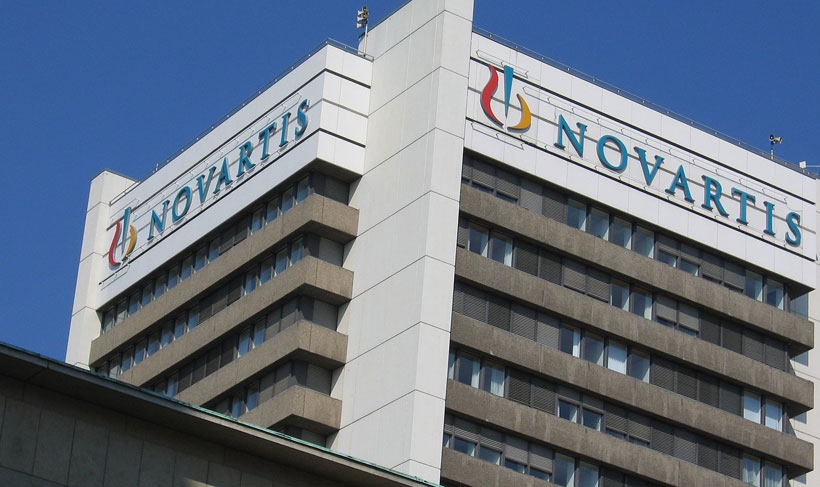


Coursera announced Thursday that the global pharma company Novartis will provide unlimited access to the platform catalog of 3,600 courses to its 108,000 employees. This global force will also have access to a stackable curriculum on data science, digital technologies, and soft skills. This offering follows a pilot earlier this year with 2,000 employees enrolled in certified classes on Coursera. “This collaboration is an important part of our efforts to unleash the power of our people and reimagine medicine in new and powerful ways,” said Simon Brown, Chief Learning Officer at Novartis. "We have set an ambition to support our associates in spending 5% of their time (about 100 hours a year) on learning". Novartis claims that it committed to $100 million of new investment in learning over the next five years. According to Coursera, pharmaceutical companies overall have lower skills proficiency in data science and computer science compared to other industries, ranking in the 30th and 10th percentile, respectively. Coursera for Business claims over 2,000 corporate clients. According to Deloitte’s Human Capital Trends in 2019. 54% of all employees will require significant reskilling and upskilling in just 3 years. • Blog on Coursera: Exploring curiosity with Simon Brown, Chief Learning Officer at Novartis
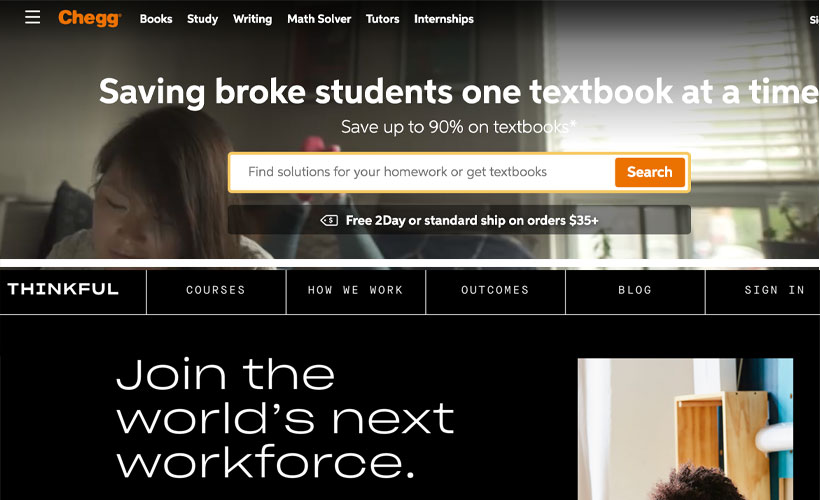
Edtech company Chegg Inc. (NYSE: CHGG), announced yesterday the acquisition of the online coding school Thinkful, for $80 million in cash, with potential additional payments of up to $20 million, according to a statement. The purchase, which was approved by the boards of directors of both companies, is expected to be closed early in the fourth quarter of 2019. "With the anticipated addition of Thinkful to our platform, Chegg will continue to expand our offerings and make it easier for students to accelerate their path from learning to earning," said Dan Rosensweig, CEO of Santa Clara, California-based Chegg. Founded in 2012 by Darrell Silver and Daniel Friedman, Brooklyn-based Thinkful seeks to make its programs broadly available by offering content at low costs and with a variety of payment options, including income share agreements. Thinkful claims that its average customer is 30 years-old, two-thirds of its customers work while in their classes, and half do not have a college degree. Also, it says that 85% of Thinkful graduates get jobs in their field of study within six months of graduating their program. For Chegg, this latest acquisition will expand its direct-to-student learning platform and add more technology career courses. Chegg had been holding onto $1.1 billion in cash, according to edSurge. Last year, it bought WriteLab for $15 million in cash.
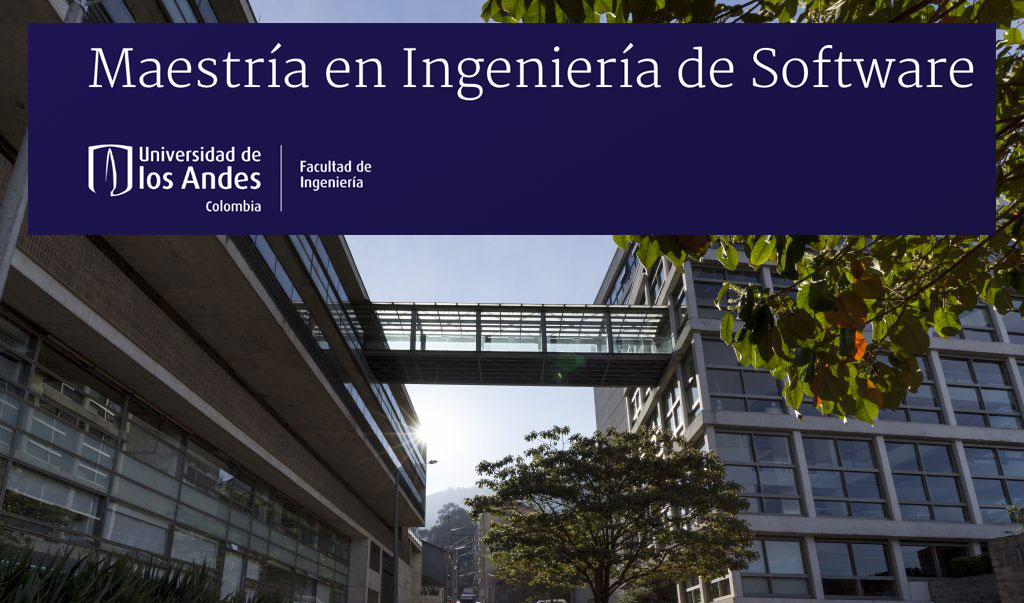
Universidad de los Andes, a leading institution in Colombia, will develop the first top-tier online master’s degree at scale in Latin America. It will be also the first Spanish-language degree on Coursera. This Master's in Software Engineering "will prepare Spanish-speaking learners — even those without a bachelor’s degree in computer science — to lead high-performance software development teams," said Dil Sidhu, Chief Content Officer at Coursera, in a blog post. Latin America currently has an estimated shortage of nearly 450,000 IT professionals. Admissions are expected to begin by August 2010, and launch in 2021, after official approval from the Colombian Ministry of Education. The degree will be comprised of 18 courses, with two credits and eight weeks per course. Pricing has not been announced yet. “Businesses today need software engineers that can lead teams, coordinate complex projects, and bring new ideas to the forefront but there aren’t enough qualified graduates in Latin America to help move the industry forward,” said Alfonso Reyes, Dean of the School of Engineering at Universidad de los Andes. 🎥 #EnVivo | DeclaraciĂłn del Presidente de la RepĂşblica @IvanDuque al tĂ©rmino de la reuniĂłn con Jeff Maggioncalda, CEO de Coursera. https://t.co/FSwOg74xDL — Presidencia Colombia (@infopresidencia) September 3, 2019 .@Uniandes y @coursera desarrollarán la primera maestrĂa virtual en IngenierĂa de Software de una instituciĂłn latinoamericana de nivel superior. El programa será el primero en español de la plataforma mundial. Más informaciĂłn: https://t.co/VNFFUzTKqf pic.twitter.com/QqhldflLMk — IngenierĂa Uniandes (@inguniandes) September 3, 2019
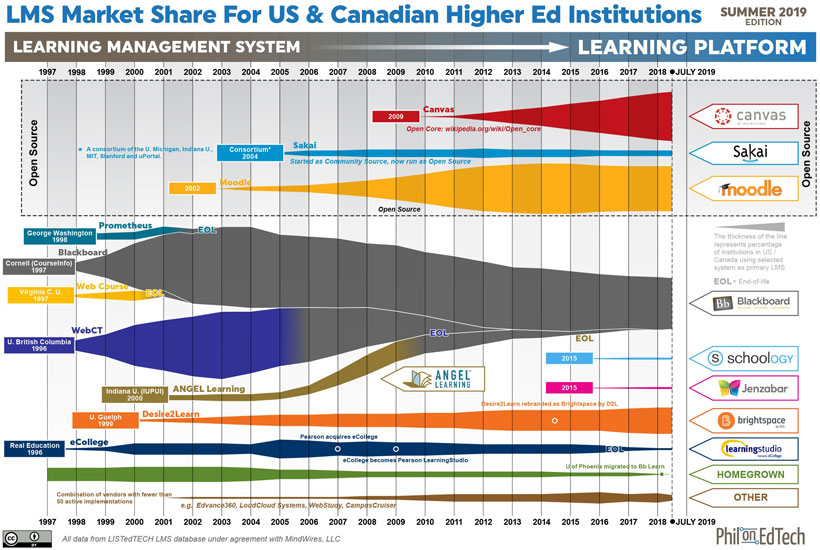
Phil Hill, edtech consultant, released its mid-year 2019 report on the business of LMS (Learning Management System) in the United States and Canada’s higher education. This market continues to be dominated worldwide at a 95% rate by “the Big Four” (Instructure Canvas, Blackboard Learn, D2L Brightspace, and Moodle). Since mid-2018, the overall market activity showed fewer LMS formal evaluations, with data pointing to a 20%– 25% drop from 2017. “This slowdown seems to be a type of plateau rather than a continuing trend,” explains Phil Hill. Canvas LMS has extended its lead in North America over Blackboard: 28% vs. 27% based on several institutions, and 35% vs. 31%, in terms of student enrollments at those schools. Meanwhile, D2L/Brightspace’s market share decreased slightly – largely due to the closure of for-profit clients – despite recent wins including Purdue University, the University of the Sciences, University of Rhode Island, and nearly a dozen others. The report also indicates Moodle’s slight decline of less than 1% in terms of institutions over the past year.
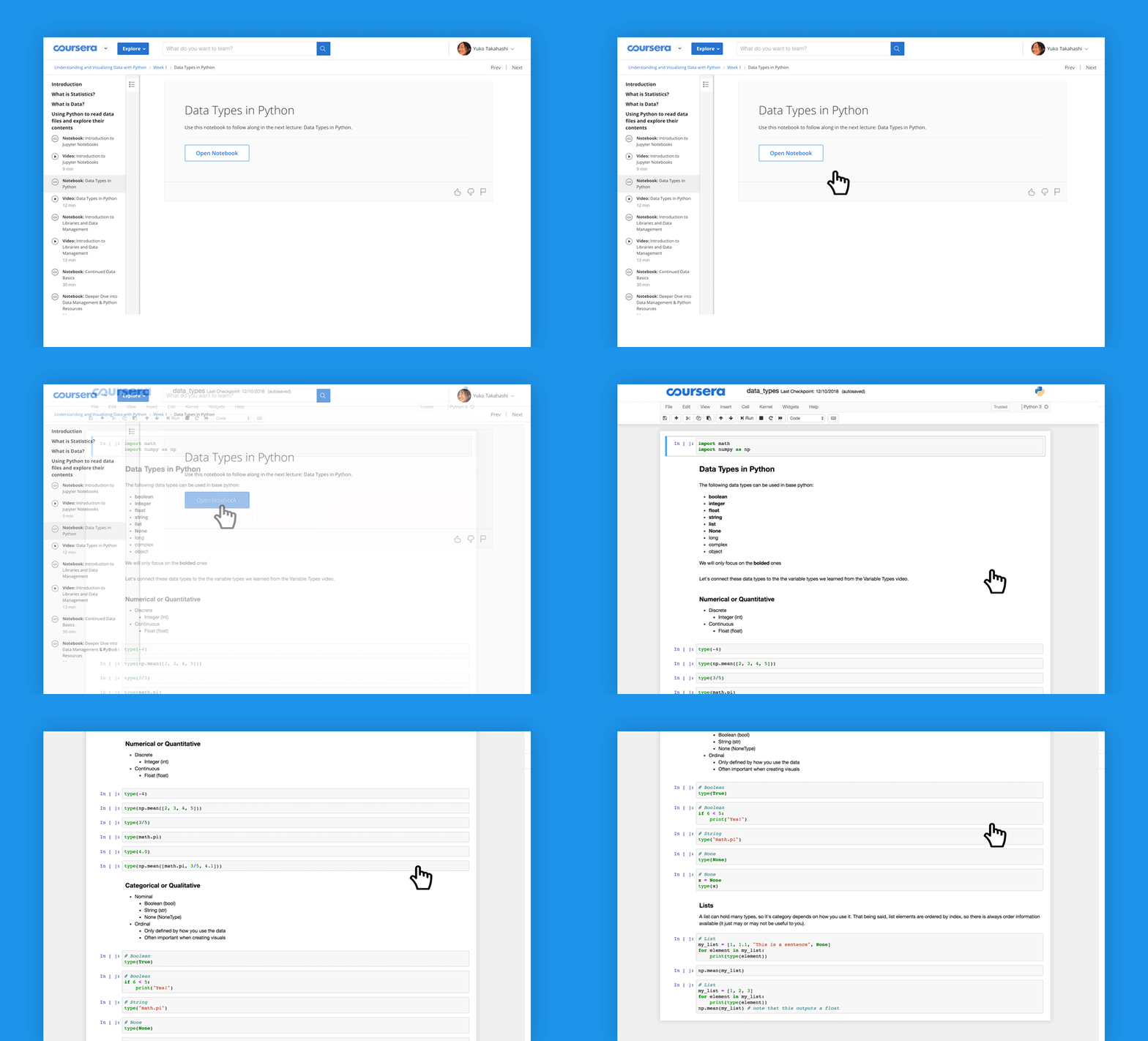
Coursera.org announced on August 28 its first-ever acquisition of the startup Rhyme Softworks, creator of a platform that allows developers to build hands-on, virtual e-learning projects. Along with the transaction, Coursera unveiled Coursera Labs. This new offering lets educational institutions and industry partners to work on projects and assignments in a browser without any environment setup or software downloads using tools like Jupyter Notebook, RStudio, VS Code, and cloud software consoles. The terms of the acquisition of Rhyme Softworks – a San Mateo, Calif-based company with a team of only six – were not disclosed. “With Rhyme’s virtual machines, beginner to intermediate-level learners can follow along with self-paced or live guided sessions while simultaneously completing a project or assignment — all from one browser using pre-configured Windows or Linux cloud desktops,” explained Jeff Maggioncalda, CEO at Coursera, in a blog post. Jeff Maggioncalda also disclosed that the University of London was a pilot partner for Coursera Labs, creating an innovative way for learners of their Introduction to Computer Programming course. For instance, with a custom application called Sleuth, students are able to write code to solve a series of interactive detective puzzles. The University of Michigan and the University of Illinois also plan to use this functionality for their upcoming content on the Coursera platform by the end of the year. "As online learning continues to support workforce training on the job and at home, it’s important to provide engaging, hands-on experiences that enable learners to test their mastery of new skills with the tools used in the workplace,” concluded Maggioncalda. Mountain View, Calif-based Coursera currently hosts 3,600 courses and 14 degrees, from 190 top university and industry partners, attracting 43 million learners and 2,000 corporate customers. The organization recently raised $103 million at a valuation of $1 billion. It competes with well-funded rivals like Udemy and Udacity, as well as the nonprofit edX.org.