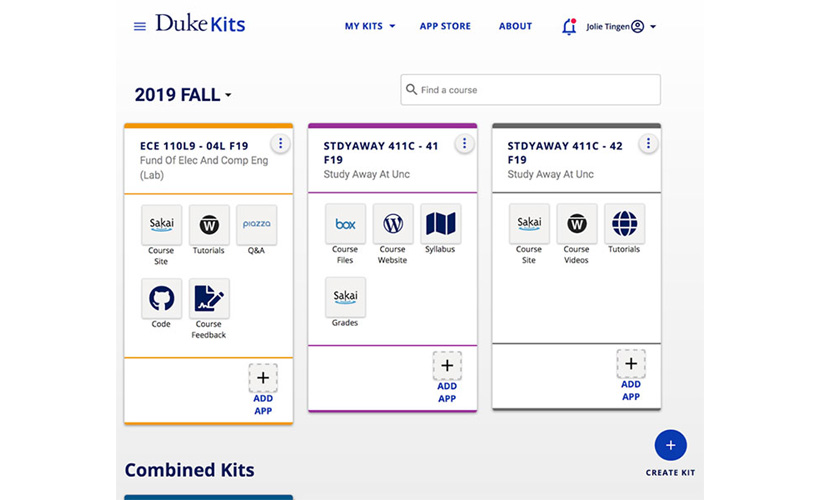
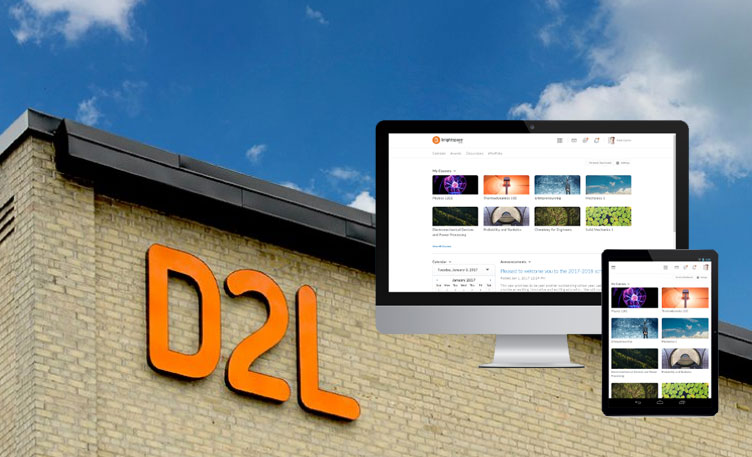

IBL News | New York "Relying on any single solution, including the LMS, is s a short-sighted technology strategy," Jolie Tingen, Product Manager at Duke, explained in an article at Educause Review. "No monolithic system can provide all learning communities with a completely optimal experience. Learning is maximized when appropriate technologies are used in conjunction with evidence-based pedagogies." Kits features a card (a “kit”) for every course. Instructors can add apps to their kits, and those apps are automatically shared with everyone in their courses. (See images below). Developed by Duke's Learning Innovation and the Office of Information Technology, Kits – now released as an alpha version – evolved from a home-grown group management solution and it was developed outside the LMS. "It brings together the centralized student access points of the LMS with the flexibility and power of an app-based system." Currently, eight applications are included on Kits, and three more are expected to arrive this year. Learning analytics are in the roadmap, too. The integration was done via LTI standard or API. In addition, Kits comes with a "custom link" option that allows both instructors and students to add any share-by-link application. Kits is built with Ruby on Rails (Backend Framework), React (Frontend Framework), Grouper (Group Management), Shibboleth (SSO) and LTI. All of the work is open at learnwithkits.com, Duke's public GitHub repository. Imagine a day in the (not too?) distant future when faculty can select the digital tools they use to facilitate learning in their domains. Including the LMS. Which we won't even be calling them by then. #highered #edtech #opm #digped https://t.co/4yVfbV8qjE — Michael Weinraub (@mweinraub87) November 26, 2019 Kits: Building the NGDLE Outside the LMS https://t.co/a25ZsRVfT5 This is interesting description from Duke U — Phil Hill (@PhilOnEdTech) November 26, 2019
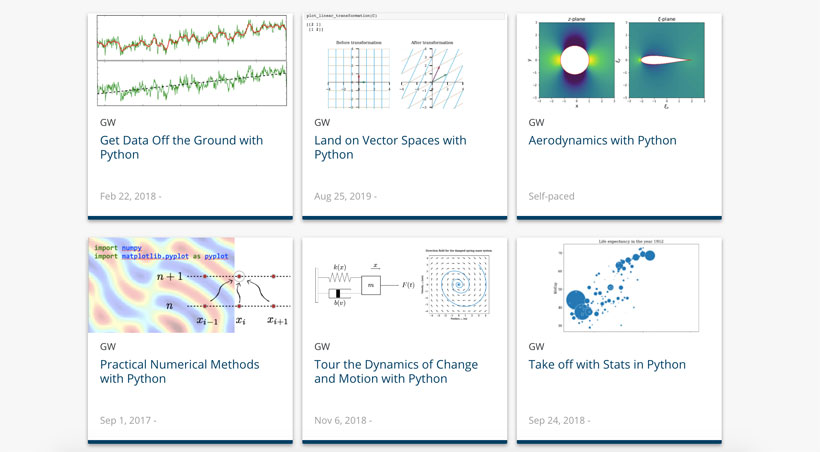
Not all schools have turned into the all-for-business MOOC-model. The George Washington University (GW), which hosts four MOOCs, still holds the belief that self-paced classes help disseminate knowledge at no cost. In addition, officials at GW said the courses help their schools reach out to thousands of people from around the globe and make learning accessible beyond the GW community for students who can not attend classes full or part-time on-campus or online. Ken Schappelle, Director of Marketing and Communications for the School of Nursing, said at GW’s The Hatchet, “by the belief that all people deserve quality health care, we aspire to be trusted advocates for the advancement of societal well-being in the clinic, community, and statehouse.” The School of Nursing offers two MOOCs, one on healthcare safety launched in May 2016 and one on clinical simulations launched in June. These courses have attracted more than 10,000 enrollees from around the world, with especially “strong” representation from Europe and Asia. MOOCs at The George Washington University started in 2014, with Dr. Lorena Barba, a professor of mechanical and aerospace engineering in the School of Engineering and Applied Science. She established two semester-long MOOCs in computing and aerodynamics in 2014 and 2017. More than 10,000 users have enrolled in her Practical Numerical Methods with Python course since its inception in 2014. The course teaches users how to work with Python, an online programming language. Barba has taken on the responsibility for creating, running and updating the existing courses, which are fully open at openedx.seas.gwu.edu. “These are all a ‘one-woman show,’” she explained.
The Open edX platform is immersed in a race against the clock to upgrade to Python 3, as Python 2 will be non-supported and deprecated at the end of 2019. Meaning, if someone finds a security problem in Python 2, it will not have the ability to be easily fixed. The Python Software Foundation decided that January 1st of 2020 will be the day that it will sunset Python 2. Python 2 was released in 2000 and today there are improvements that Python 2 can't handle. A part of the upgrade of the Open edX platform corresponds to course authors. In this regard, the edX managing team has urged instructors who use Python Evaluated Input problems to immediately upgrade into Python 3. Recently, edX outlined in this document how it plans to scope the problem, migrate the code, and work with the Open edX community to "ensure that the process is as painless as possible, and meets the needs of our stakeholders." The Open edX software is considered a large project, spanning many applications and GitHub repositories, with even more dependencies on third-party libraries. "Thanks to helping from the community, we’re making good progress," Ned Batchelder, Open edX Software Architect said. "The Python test suite for our main repository now runs under both Python 2 and Python 3." Another porting effort ahead points to Django, the framework extensively used on Open edX web applications. The current version 1.11 of Django is coming to its end soon and there is a need to move to Django 2.2. Once the platform runs on Python 3 and Django 2.2, the next Open edX release, called Juniper, will get started. • OEP-7: Migrating to Python 3
Instructure (NYSE: INST), the company behind Canvas LMS, publicly announced that it has begun to explore a number of strategic alternatives "to maximize shareholder value", including a possible sale. Canvas owns about 38% of the LMS market. "These alternatives may include continuing as a standalone public company, going private, or being purchased by a strategic partner," the company said in a statement Thursday. Instructure's board retained J.P. Morgan as its financial advisor and Cooley LLP as its legal advisor. The move of the board took place in response to the pressure by activist investors Sachem Head, Praesidium Investment Management and more recently, Jana Partners, who disclosed it had a 1% stake. They called for Instructure to explore a sale, reportedly identifying multiple potential private equity buyers. Kevin Oram, Praesidium’s Co-Founder and Managing Partner, said last week that selling Bridge –Instructure's unprofitable employee development platform– would unlock the value of Canvas, which he estimated to be worth $2.5 billion. Phil Hill, consultant and author of Phil on Ed Tech blog, wrote that competitor Blackboard went through a similar process a few years ago, going private in 2011. Blackboard considered a sale in 2015 but didn’t go through with it. Instructure's previously scheduled financial analyst day on December 3 was canceled "to allow management and the board to explore these strategic alternatives for the company," said the Salt Lake City-based corporation. The stock has gained significant value since activists hedge funds started to call for a sale, especially this week, when it moved from $47.91 on November 13 to $52.98 on November 15. • IBL News: News about Canvas LMS and Instructure
Udacity announced yesterday in San Francisco the Intel Edge AI Scholarship Program and the Intel Edge AI for IoT Developers Nanodegree Program. The pedagogical goal is to teach developers to accelerate the development and deployment of high-performance computer vision and deep learning solutions using Intel Distribution of OpenVINO toolkit (which allows deploying pre-trained deep learning models.) In the first phase of the scholarship program, students will get access to the Intel Edge AI Fundamentals course, the first class of the Intel Edge AI for IoT Developers Nanodegree program. Students who successfully complete this course will earn a full scholarship to the Intel Edge AI for IoT Developers Nanodegree program. The number of seats is limited to 750 students. “With Udacity, we are training the next generation of AI developers to go where the data is generated in the physical world: at the Edge," said Jonathan Ballon Intel Vice President and General Manager, Internet of Things Group. "Optimizing the direct deployment of models on edge devices requires knowledge of unique constraints like power, network bandwidth & latency, varying compute architectures and more.” The deadline to apply is December 10.