Google released yesterday Gemma 2B and 7B, two lightweight, pre-trained open-source AI models, mostly suitable for small developments such as simple chatbots or summarizations. It also lets developers use the research and technology used to create the Gemini closed models. They are available via Kaggle, Hugging Face, Nvidia’s NeMo, and Google’s Vertex AI. It’s designed with Google’s AI Principles at the forefront. Gemma supports multi-framework Keras 3.0, native PyTorch, JAX, and Hugging Face Transformers. Developers and researchers can work with Gemma using free access in Kaggle, a free tier for Colab notebooks, and $300 in credits for first-time Google Cloud users. Researchers can also apply for Google Cloud credits of up to $500,000 to accelerate their projects. Each size of Gemma is available at ai.google.dev/gemma. Google is also providing toolchains for inference and supervised fine-tuning (SFT) across all major frameworks: JAX, PyTorch, and TensorFlow through native Keras 3.0. Google’s Gemini comes in several weights, including Gemini Nano, Gemini Pro, and Gemini Ultra. Last week, Google announced a faster Gemini 1.5 intended for business users and developers. Gemini 1.5 Pro's 1,000,000+ token context length is incredible. I got early access and spent my Saturday night running tests. Here are 6 impressive capabilities I found: pic.twitter.com/Rh8qGCUevE — Rowan Cheung (@rowancheung) February 18, 2024
OpenAI announced that it started to test a memory feature that powers ChatGPT to remember things users discuss across all chats. This feature, which saves users from having to repeat information, will be applied to GPTs, too. "You're in control of ChatGPT's memory. You can explicitly tell it to remember something, ask it what it remembers, and tell it to forget conversationally or through settings. You can also turn it off entirely," said the company. Users can turn off memory at any time (Settings > Personalization > Memory). While memory is off, memories won't be used or created. OpenAI put these examples: You’ve explained that you prefer meeting notes to have headlines, bullets, and action items summarized at the bottom. ChatGPT remembers this and recaps meetings this way. You’ve told ChatGPT you own a neighborhood coffee shop. When brainstorming messaging for a social post celebrating a new location, ChatGPT knows where to start. You mention that you have a toddler and that she loves jellyfish. When you ask ChatGPT to help create her birthday card, it suggests a jellyfish wearing a party hat. As a kindergarten teacher with 25 students, you prefer 50-minute lessons with follow-up activities. ChatGPT remembers this when helping you create lesson plans. . https://t.co/JKN1RtCRV3 We just launched an experiment, for a limited % of users, on a new personalized "memory" capability for ChatGPT. — Adam.GPT (@TheRealAdamG) February 13, 2024
NVIDIA introduced yesterday a personalized demo chatbot app called Chat With RTX that runs locally on RTX-Powered Windows PCs providing fast and secure results. This early version allows users to personalize a LLM connected to their own content—docs, notes, videos, or other data. It leverages retrieval-augmented generation (RAG), TensorRT-LLM, and RTX acceleration so users can query a custom chatbot to quickly get contextually relevant answers. Available to download, with 35GB's installer, NVIDIA's Chat With RTX requires Windows 11 and a GPU with NVIDIA GeForce RTX 30 or 40 Series GPU or NVIDIA RTX Ampere or Ada Generation GPU with at least 8GB of VRAM. With this app tailored for searching local documents and personal files, users can feed it YouTube videos and their own documents to create summaries and get relevant answers based on their own data analyzing collection of documents as well as scanning through PDFs. Chat with RTX essentially installs a web server and Python instance on a PC, which then leverages Mistral or Llama 2 models to query the data. It doesn’t remember context, so follow-up questions can’t be based on the context of a previous question. The installation is 30 minutes long, as The Verge analyzed. It takes an hour to install the two language models — Mistral 7B and LLaMA 2— and they required 70GB. Once it's installed, a command prompt window launches with an active session, and the user can ask queries via a browser-based interface. .  🚨 BREAKING: Nvidia just released Chat with RTX, an AI chatbot that runs locally on your PC. It can summarize or search documents across your PC's files and even YouTube videos and playlists. The chatbot runs locally, meaning results are fast, you can use it without the… pic.twitter.com/je3gzOs45I — Rowan Cheung (@rowancheung) February 13, 2024
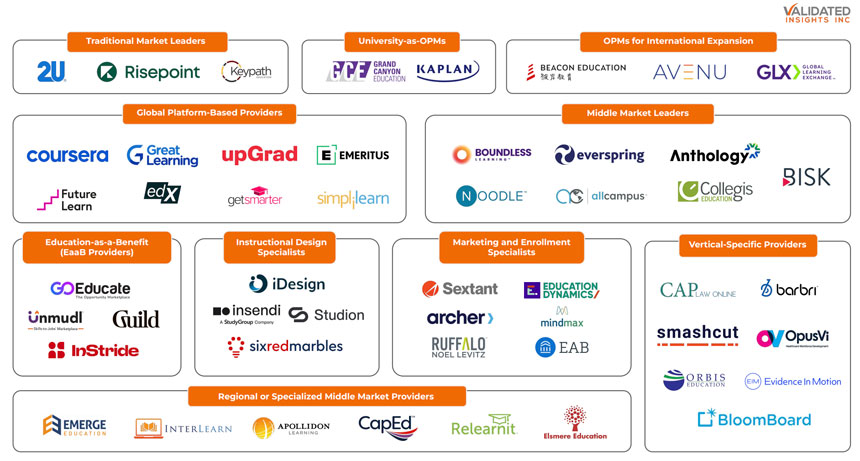
Online learning platform company 2U / edX warned yesterday of substantial doubt about its ability to continue as a going concern. Referring to its liquidity and cash flow, the Lanham, Md.-based company said: "The company expects that if it does not amend or refinance its term loan, or raise capital to reduce its debt in the short term, and in the event the obligations under its term loan accelerate or come due within twelve months from the date of its financial statement issuance in accordance with its current terms, there is substantial doubt about its ability to continue as a going concern." 2U Inc., now under the leadership of a new CEO, presented its results for the fourth quarter and the full year of 2023. "We are resetting and enhancing our operations with renewed financial discipline," said Paul Lalljie, Chief Executive Officer of 2U. "Looking ahead, we believe this renewed focus, along with our market-proven offerings, robust partner network, and scalable technology and services, will allow us to take advantage of increasing demand for high-quality online education and continue to deliver on our mission." "Our immediate focus in 2024 is to strengthen the fundamentals of our business in order to extend our debt maturities and restore a healthy balance sheet," added Matthew Norden, Chief Financial Officer of 2U.On the results of 2023 compared to 2022, revenue decreased 2% to $946.0 million and net loss was $317.6 million. Costs and expenses for the year totaled $1.17 billion, a 4% decrease from $1.22 billion in 2022. The results for the fourth quarter of 2023 compared to fourth quarter 2022 showed a revenue increased of 8% to $255.7 million, while degree program segment revenue increased 19% to $163.5 million and alternative credential segment revenue decreased 7% to $92.2 million. Looking forward, the company expects to increase its revenue in the first quarter of 2024 from $195 million to $198 million with a net loss ranging from $60 million to $55 million and adjusted EBITDA to range from $10 million to $12 million. For the full year of 2024, it expects revenue to range from $805 million to $815 million, net loss to range from $90 million to $85 million, and adjusted EBITDA to range from $120 million to $125 million. .
Apple released last week MGIE (MLLM-Guided Image Editing), a new open-source AI model that edits images based on natural language instructions. It leverages multimodal large language models (MLLMs) to interpret user commands and perform pixel-level manipulations. Experts agreed that MGIE represents a major breakthrough, highlighting that the pace of progress in multimodal AI systems is accelerating quickly. The model can handle a wide range of editing scenarios, such as simple color and brightness adjustments, photo optimization, object manipulations, and Photoshop-style modification, such as cropping, resizing, rotating, flipping, and adding filters. For example, an instruction can make the sky more blue, and MGIE produces the instruction to increase the saturation of the sky region by 20%. MGIE — which was presented in a paper accepted at the International Conference on Learning Representations (ICLR) 2024 — is the result of a collaboration between Apple and researchers from the University of California, Santa Barbara. MGIE is available as an open-source project on GitHub. The project also provides a demo notebook that shows how to use MGIE for various editing tasks. Users can also try out MGIE online through a web demo hosted on Hugging Face Spaces. .