Black Forest Labs, the Andreessen Horowitz-backed German startup behind the image generation model Flux 1, announced, in a blog post, an API in beta. Developers can choose which Flux model to build into their app or service, including content moderation layer and constraints on image resolution. The company also unveiled its latest image generation model, Flux1.1 Pro, which it claims provides six times faster generation than its predecessor. The model can scale up to 2k (2048 × 1080) images, a feature soon available in the API. In addition to Black Forest Labs’ platform, Flux1.1 Pro is available through the startup’s partners, including Together AI, Replicate, Fal.AI, and Freepik. Prices start at 2.5 credits per image; 100 credits cost $1. Flux1.1 Pro costs four credits per image. Black Forest Labs was co-founded by the engineers who built the tech behind Stability AI, including Andreas Blattmann, Patrick Esser, Dominik Lorenz, and CEO Robin Rombach. It raised $31 million in funding and is now said to be raising $100 million at a $1 billion valuation. The start-up's current backers include Y Combinator CEO Garry Tan and former Oculus CEO Brendan Iribe. It is developing video-generating models. Competitors include Ideogram, Pika, Luma, Runway, Stability, Midjourney, and incumbents like OpenAI and Google. The startup became controversial after its deal with xAI to build Flux into xAI’s Grok without safety guardrails, resulting in a torrent of outrageous images.
Another approach to dealing with course materials is to leverage GenAI to create a digital twin and get 24/7 answers to course-related questions. This AI-based knowledge base provides students access to the course repository and supplemental learning resources. The SecureTwin.AI platform is one of the competing companies. This digital twin responds to common queries (provided as prompts) and any other questions the student might have. The videos below demonstrate how a professor solved these challenges The instructor created a digital twin, populated it with course materials, and allowed students to ask questions via chat. This approach allowed him to gain the flexibility to juggle teaching and research.
AI chipmaker and cloud services start-up Cerebras Systems filed its prospectus for an IPO on the Nasdaq last month. However, the news agency Reuters reported yesterday that the company will likely postpone its IPO after facing delays with a U.S. national security review on UAE-based tech conglomerate G42's minority investment in the AI chipmaker. Cerebras competes with industry leader Nvidia in the lucrative artificial intelligence chip market. The Sunnyvale, California-based company—which will trade under the ticker symbol “CBRS”—seeks to capitalize on investor excitement for AI by conducting a hot IPO (Initial Public Offering). The company said its WSE-3 chip has more cores and memory than Nvidia’s popular H100. Nvidia’s graphics processing units are the industry's choice for training and running AI models. But the AI semiconductor market is getting more crowded. Amazon, Google, and Microsoft are developing AI chips for their cloud services. AMD and Intel are also in this market. Taiwan Semiconductor Manufacturing Company makes the Cerebras chips. Cerebras warned investors that any possible supply chain disruptions may hurt the company. According to the filing, Cerebras had a net loss of $66.6 million on $136.4 million in sales in the first six months of 2024. The company reported a net loss of $127.2 million on revenue of $78.7 million for the full year of 2023. Last year, 83% of Cerebras's revenue came from G42, a UAE-based AI firm that counts Microsoft as an investor. According to the filing, in May, G42 committed to purchasing $1.43 billion in orders from Cerebras before March 2025. G42 currently owns under 5% of Cerebras' Class A shares, and the firm can purchase more depending on how much Cerebras product it buys. The largest investor in Cerebras is venture firm Foundation Capital, followed by Benchmark and Eclipse Ventures. According to the filing, Alpha Wave, Coatue, and Altimeter each own at least 5%. Other investors include OpenAI CEO Sam Altman and Sun Microsystems co-founder Andy Bechtolsheim. The only individual who owns 5% or more is Andrew Feldman, the startup's co-founder and CEO. Just 82 companies went public in the U.S. in the first half of the year, a slight uptick from last year. Even though conditions to go public are good — interest rates are falling, and tech stocks are trading up — Many companies are pushing I.P.O. plans to 2025, hoping to avoid any market volatility caused by the presidential election. “It’s almost like a wait-and-see environment,” said one analyst. [Disclosure: ibl.ai, the parent company of iblnews.org, has NVIDIA as a client]
The University of California, Los Angeles (UCLA) announced an agreement with OpenAI to deploy a tailored version of ChatGPT Enterprise to its students, faculty, researchers, and administrative staff this month. The institution noted that more universities in the University of California system could adopt this approach. Lucy Avetisyan, UCLA’s Associate Vice Chancellor and Chief Information Officer, announced in a press release that this fall, the institution will solicit project ideas to boost student success, research efforts, and institutional effectiveness and efficiency. OpenAI Chief Operating Officer Brad Lightcap said, “We look forward to working closely with UCLA to find the best ways for ChatGPT to support a rich learning experience and cutting-edge research.” UCLA Chief AI Officer Chris Mattmann explained that AI can customize learning and practice materials, schedule appointments, and maintain calendars.
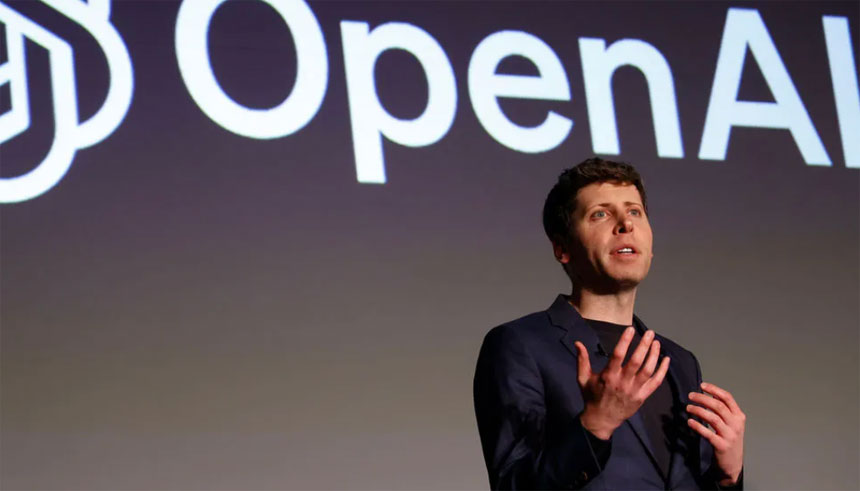
Yesterday, OpenAI introduced "Canvas," a new interface built with GPT-4o, in early beta, for working with ChatGPT on writing and coding projects in a separate window. It's a new way of working together beyond the simple chat that allows users to create and refine ideas side by side or edit text or code while better understanding context. "It's a new operating system for the AI age," said one expert. ChatGPT’s new interface offers similar features to Anthropic’s Artifacts, launched in June, and the viral coding companion, Cursor. OpenAI is racing to match competitor offerings. Canvas was rolled out globally for ChatGPT Plus and Team users. Enterprise and Edu users will get access next week. OpenAI plans to make it available to all ChatGPT Free users when it’s out of beta. Users can also restore previous versions of their work by using the back button. Canvas opens automatically when ChatGPT detects a scenario that could be helpful. Writing shortcuts include: Suggest edits: ChatGPT offers inline suggestions and feedback. Adjust the length: Edits the document length to be shorter or longer. Change reading level: Adjusts the reading level, from Kindergarten to Graduate School. Add final polish: Checks for grammar, clarity, and consistency. Add emojis: Adds relevant emojis for emphasis and color. Coding shortcuts include: Review code: ChatGPT provides inline suggestions to improve your code. Add logs: Inserts print statements to help you debug and understand your code. Add comments: Adds comments to the code to make it easier to understand. Fix bugs: Detects and rewrites problematic code to resolve errors. Port to a language: Translates your code into JavaScript, TypeScript, Python, Java, C++, or PHP. ChatGPT is also getting a new “review code” button, which will suggest specific edits for the code in the window. OpenAI just launched canvas, a document and code editor for @chatGPTapp. It's clear that they're not just building a chatbot—they're trying to build a new operating system for the AI age: pic.twitter.com/PbJmoSLYRH — Dan Shipper 📧 (@danshipper) October 3, 2024