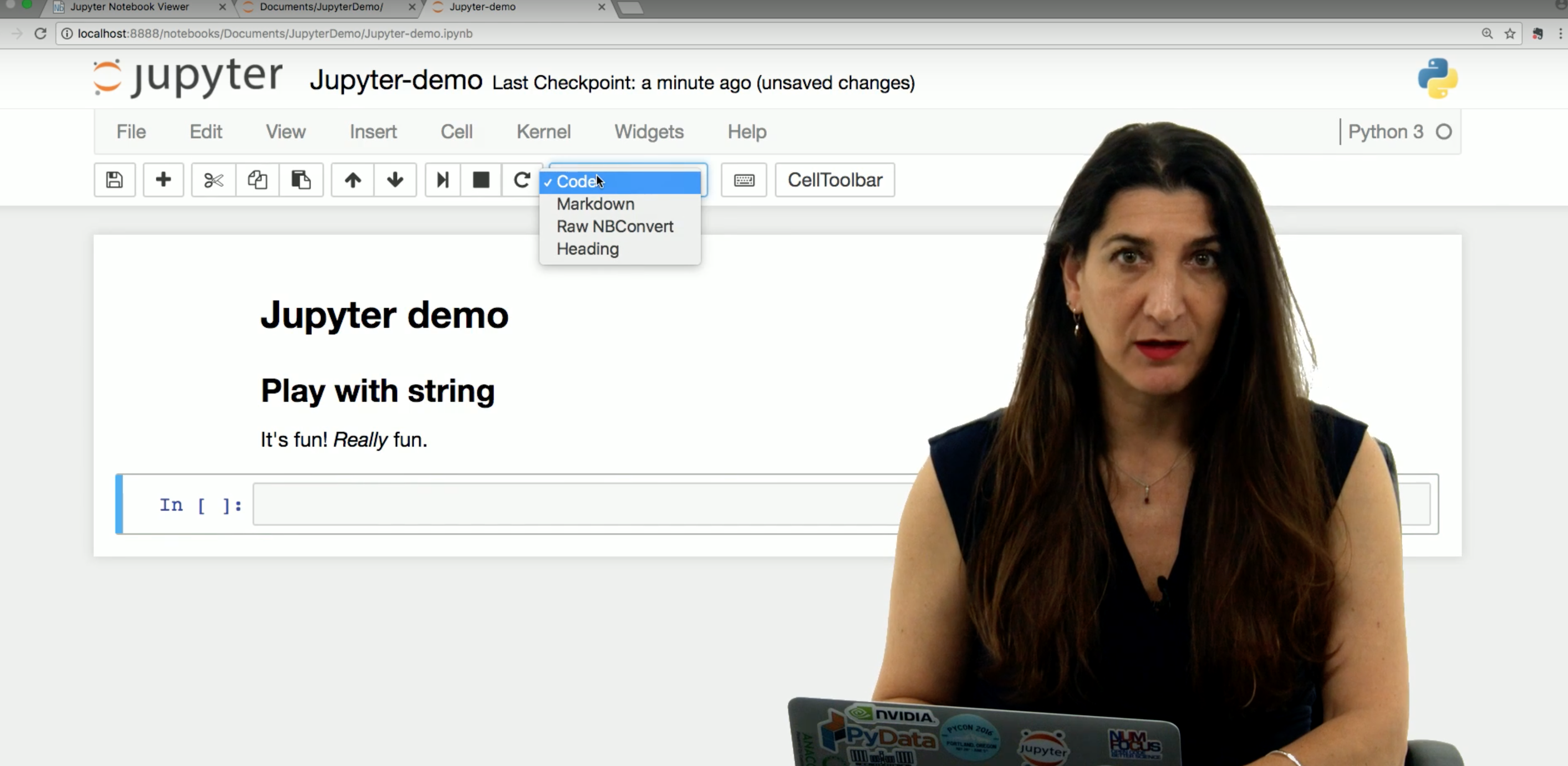
edX has launched an advanced version of its app for Android on the Google Play Store. Version 2.6.2 of the mobile app allows learners to browse edX courses without creating an edX account and without logging in. Learners can register for an edX account or sign in from the about page for any course. The new edX mobile app is a companion to the edx.org website. It also works on Open edX installations.
Class-Central.com has come up with a list of the top 50 free online courses of all time based on thousands of reviews written by their users. "When I launched Class Central back in November 2011, there were around 18 or so free online courses and almost all of them were at Stanford. Now there are close to 6,000 MOOCs from 600+ universities around the world," explained Dhawal Shah, Founder and CEO of Class Central. This is the list: An Introduction to Interactive Programming in Python (Part 1) Rice University via Coursera Modern & Contemporary American Poetry (“ModPo”) University of Pennsylvania via Coursera A Life of Happiness and Fulfillment Indian School of Business via Coursera Coding in your Classroom, Now! University of Urbino via EMMA Introduction to Programming with MATLAB Vanderbilt University via Coursera What Is a Mind? University of Cape Town via FutureLearn ER22.1x: Justice Harvard University via edX Machine Learning Stanford University via Coursera Introduction to Complexity Santa Fe Institute via Complexity Explorer Understanding Dementia University of Tasmania via Independent Learn to Program: The Fundamentals University of Toronto via Coursera The Science of the Solar System California Institute of Technology via Coursera The Bible's Prehistory, Purpose, and Political Future Emory University via Coursera The Great Poem Series: Unbinding Prometheus via OpenLearning Functional Programming Principles in Scala École Polytechnique Fédérale de Lausanne via Coursera Learning How to Learn: Powerful mental tools to help you master tough subjects University of California, San Diego via Coursera 7.00x: Introduction to Biology – The Secret of Life Massachusetts Institute of Technology via edX Medical Neuroscience Duke University via Coursera TM01x: Tsinghua Chinese: Start Talking with 1.3 Billion People Tsinghua University via edX Fundamentals of Product Management via Skillshare Marketing in a Digital World University of Illinois at Urbana-Champaign via Coursera Moralities of Everyday Life Yale University via Coursera Algorithms: Design and Analysis, Part 1 Stanford University via Coursera Calculus One Ohio State University via Coursera CS188.1x: Artificial Intelligence University of California, Berkeley via edX Model Thinking University of Michigan via Coursera Introduction to Dutch University of Groningen via FutureLearn Aprender Universidad Nacional Autónoma de México via Coursera The 3D Printing Revolution University of Illinois at Urbana-Champaign via Coursera 15.071x: The Analytics Edge Massachusetts Institute of Technology via edX Preparing to Manage Human Resources University of Minnesota via Coursera Fractals and Scaling Santa Fe Institute via Complexity Explorer The Modern and the Postmodern (Part 1) Wesleyan University via Coursera Decision Making in a Complex and Uncertain World University of Groningen via FutureLearn Data Mining with Weka University of Waikato via Independent Cryptography I Stanford University via Coursera CS50x: Introduction to Computer Science Harvard University via edX Artificial Intelligence for Robotics Stanford University via Udacity Shakespeare and his World The University of Warwick via FutureLearn Medicine and the Arts: Humanising Healthcare University of Cape Town via FutureLearn Think101x: The Science of Everyday Thinking University of Queensland via edX 6.002.1x: Circuits and Electronics 1: Basic Circuit Analysis Massachusetts Institute of Technology via edX Intro to Computer Science University of Virginia via Udacity Programming for Everybody (Getting Started with Python) University of Michigan via Coursera Mindfulness for Wellbeing and Peak Performance Monash University via FutureLearn Finding Hidden Messages in DNA (Bioinformatics I) University of California, San Diego via Coursera Algorithms for DNA Sequencing Johns Hopkins University via Coursera CS110x: Big Data Analysis with Apache Spark University of California, Berkeley via edX Algorithms, Part I Princeton University via Coursera Introduction to Mathematical Thinking Stanford University via Coursera CS1156x: Learning From Data (Introductory Machine Learning) California Institute of Technology via edX
TU Delft, the largest and oldest public technological university in the Netherlands, announced this week that it has reached 1 million enrollments, with an average age of 29, in its 36 MOOCs in science, design and engineering since 2013. MOOCs' content is typically derived from classes given in TU Delft's regular degree programs. At the university level, "these open courses have been used to enable students to attend the lectures online so classroom hours are dedicated to in-depth discussion of the course material, rather than to knowledge transfer". Some companies, such as Royal Haskoning DHV and Capgemini, have used the MOOCs internally as part of company training. TU Delft has released MOOCs for children, too. The MOOC in Dutch "Scratch, programmeren voor kinderen (8+)" (Scratch, programming for kids (8+)), started on June 15, has attracted 2,500 kids. "Solar Energy" by Arno Smets, TU Delft's first MOOC, in 2013, has reached 130,000 enrollments and has been translated into Arabic on the Jordanian edraak.org platform, with the goal to adopt solar energy as an energy source in the Middle East. The course teaches how to install a photovoltaic system using solar panels, and so contribute to the reduction of greenhouse gases to the atmosphere. Anka Mulder, vice-president of TU Delft and the driving force behind the MOOCs at the university, has announced that for-credit MOOCs are next. The following are the course enrollments at Delft: Course Number of Runs Total Solar Energy 4 131.789 Creative Problem Solving & Decision Making 3 112.972 Data Analysis to the MAX() 3 106.794 Functional Programming 2 62.581 Aeronautical Engineering 4 60.951 Introduction to Credit Risk Management 3 51.549 Pre-University Calculus 3 48.338 Framing : How Politicians Debate 2 47.114 Product Design: Delft Design Approach 3 38.390 Data Analysis: Building Your Own Business Dashboard 2 35.997 Leadership for Engineers 1 29.868 Introduction to Water Treatment 1 29.179 Data Analysis: Visualization and Dashboard Design 1 24.343 Drinking Water Treatment 3 23.812 Industrial Biotechnology 3 23.232 Treatment of Urban Sewage 3 21.886 NGI 1 1 20.534 Water & climate 3 19.415 Circular Economy: an introduction 2 14.113 Responsible Innovation 2 13.997 Sustainable Urban Development 1 10.958 Transport Phenomena 2 8.913 Image | Ability: visualising the Unimaginable 2 8.252 Topology in Condensed Matter: Tying Quantum Knots 2 7.268 Building with Nature 2 7.081 The Next Generation of Infrastructure 2 7.065 Next Generation Infrastructures part 2 1 6.233 Geoscience: the earth and its resources 1 5.324 Open Government 1 4.080 Sustainable Energy: Designing a Renewable Future 1 3.486 Quantum Cryptography 1 3.343 Project Management of Engineering Projects 1 3.138 ScratchX: programmeren voor kinderen 1 2.695 Design Practice in Business 1 2.578 Understanding Nuclear Energy 1 1.482 Observation Theory: Estimating the Unknown 1 1.429 Total 70 1.000.179 The images below reflect Delft's success.
Harvard University has launched HarvardXPLUS, a premium Open edX platform with a selection of popular online courses. This project will include credentials, limited enrollments and smaller cohorts, in order to "allow students to engage even more with your fellow learners , and with Harvard faculty and teaching fellows", explained Robert Lue, HarvardX Faculty Director. "Today’s online learners seek premium content and unique opportunities to interact with like-minded peers. During the past four years, many of you have also expressed an interest in a more personalized online learning experience," added. HarvardXPLUS now includes four courses, all of which are paid and open to enrollment starting on September 2016. Principles of Biochemistry ($495) ContractsX 2016 ($495) Masterpieces of World Literature ($495) ChinaX Book Club ($195) The platform uses the same theme as MIT Professional X and follows the same business model, based mostly on targeting professional audiences who are willing to pay to enjoy smaller cohorts and earning credentials (for example, any student can now take the Contracts and Principles of Biochemistry courses for free on edx.org but without any credentialing, since the verified certificate option is closed.) It is remarkable that the two founders of edX (MIT and Harvard) have decided to launch their own branded platforms instead of concentrating all of their courses on edx.org.
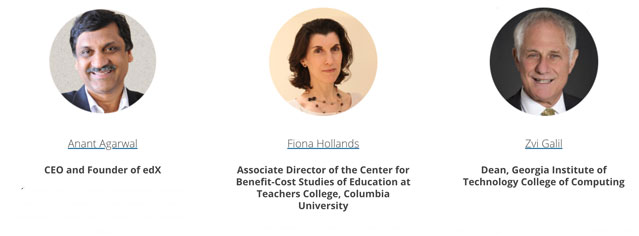
Are MOOCs a failure? Read this interesting thought from Dr. Joshua Kim, director of Digital Learning Initiatives al Dartmouth University, from Inside Higher Ed: "Those of us participating in the open online education movement (…) never thought that MOOCs would disrupt higher ed. We create open online courses because offering educational opportunities to the world’s learners is both aligned with our missions, and because we think that participating in this movement is a good way to learn about learning." And a good example of the success of the open education (or open courses) movement is edX. Dr. Joshua Kim is sharing these mind blowing numbers: There are 8.3 million (unique) lifelong learners on the edX platform. Between 2012, when edX started, and today – there have been 27 million course enrollments. Over 1,000 courses have been offered. There have been over 2,300 faculty and staff who have taught on edX. Over 840,000 certificates have been earned by edX learners. EdX has over 100 schools, institutes and organizations in the Consortium creating open online courses. Who exactly are all these lifelong learners on the edX platform? Seven-in-ten lifelong learners are 25 years old or older. The median age of an edX learner is 29. About 36 percent are women, and each year the proportion of women learners on the edX platform grows. It will be interesting to see if the gender distribution for open online learning starts to match that for post-secondary education as a whole (~57%). Over two-thirds have a bachelor degree or higher, with over a quarter having a masters. (And 4% having a PhD). And where do edX's lifelong learners come from? There are lifelong learners in every country of the world (save North Korea). A bit over a quarter (27%) of edX learners come from the U.S. The next biggest country is India (11%), the U.K. and Brazil (both 4%) and China, Canada, and Mexico (3% each). Over four-in-ten edX learners live in emerging economy countries. "Does Coursera, NovoEd, FutureLearn, Canvas.net, and other open online learning platforms report similar levels and trends?", wonders Dr. Kim. – Inside Higher Ed, July 21: The Scope of edX