


OPM operators –which are dedicated to helping universities build, recruit for and deliver digital programs– have realized that online degrees are one of the fastest growing areas of higher education. Revenue sharing is the dominant model in this industry but a fee for service, unbundled and hybrid relationships are growing fast. Over six million students worldwide pursue higher education online, representing a $30B market today. In the US, online students make up only 15% of all higher education enrollments, while in China it is 10%. The top 10 OPM players make up over half of global revenue. The US is the largest market by far, and VCs are very active. As recent transactions, we’ve recently seen how 2U invested in Keypath, Wiley acquired Learning House, Seek acquired OES, Grand Canyon spun out and acquired Orbis, Emeritus raised $40 million. One of the main uncertainties is whether universities will embrace the OPM model and continue to outsource capabilities, or whether they will seek to build them in-house. • The Anatomy of an OPM – PDF by Holon IQ
Developed by Queen Rania Foundation and headquartered in Jordan, Edraak, a well-designed open education platform built on Open edX, has reached over 1.5 million learners across the Arab world since its launch in 2014, according to its CEO Shireen Yacoub. Queen Rania Al Abdullah officially announced School Learning on January 24 during an event hosted by Google in Davos, Switzerland. King Abdullah II and Google CEO, Sundar Pichai, were also present. [Above in the picture] The project was developed with the support of a $3 million grant from Google.org, and complemented with engagement from Google employees who provide product design expertise. School Learning was launched with Mathematics materials for grades 7 and 9, including more than 1,200 educational minutes of bite-sized video lectures. The e-curricula and learning resources for the rest of the grades will be released over two phases by the end of this year, and other major subjects will be gradually introduced by 2020. The platform will also offer tools and resources for parents and educators, empowering them to guide children’s learning journeys. The new platform offers sequential learning material as well as student-centred inquiry-based learning, making it possible for students to search for specific concepts without having to enroll in a predefined learning sequence. Given the growing need to support remedial education due to conflict and unrest that have disrupted formal education in the region, the platform adopts a competency-based approach to learning, while also providing material that can be used in a blended learning setting. "A child denied an education isn’t just a tragedy for that child; it leaves the rest of us vulnerable," Queen Rania Al Abdullah said." "Education is a solution capable of bringing hope and opportunity to the Middle East." • IBL News (Feb 2018): Edraak.org Expands its Open edX Platform into K-12 with a Grant from Google • IBL News (May 2014): Edraak.org, an Open edX platform aimed at Arab-speaking people
This is a selection of the ten must-attended sessions in our view: Wednesday 27 Wednesday Keynotes: James C. Hall • Karen Flammer • Paul Walsh • John Mark Walker • Anant Agarwal • Candace Thille LabXchange: Science and learning–connected. Robert Lue Cheaper MOOCs and Masters: Sir Tim O'Shea • Professor Eileen Scanlon State of Open edX Architecture: Nimisha Asthagiri Thursday 28 Thursday Keynotes: Dean Baker • Marco Morales • Walter Bender • Mark Haseltine The best of both worlds in fully online master’s: integrating Open edX and Canvas:  Jea Choi • Alison Brauneis • Greg Bruhns • Grace Lyo ASU Innovation with Open edX:  Elizabeth Gordon • Roger Kohler • Carrie Bauer • Kristen Ford From 0 to 1 Million and Beyond: The Linux Foundation eLearning Journey, Flavia Cioanca How MIT is leveraging Open EdX in on campus courses: Sheryl Barnes • Meredith Davies Delivering Targeted Online Learning Environments in a Changing Higher Education Landscape:Vince Kellen • Complete Schedule • Conference Site
The first release candidate, Ironwood.1rc1, was just made available this week. [Update: The Ironwood RC3 was released on February 27, after the RC2 didn't properly install]. “Our goal is to release Ironwood in two weeks. In order to do that, I need to hear back from you about how testing is going,” Ned Batchelder, Software Architect at edX announced on Google Groups. This engineer also noted that the platform installation instructions have changed slightly. Ironwood, the ninth release of the Open edX platform, includes improvements over the current Hawthorn.2 version. The release comes prior to the Open edX developers’ conference, scheduled for March 26-29 in San Diego. [Update: edX releases the agenda of the event]
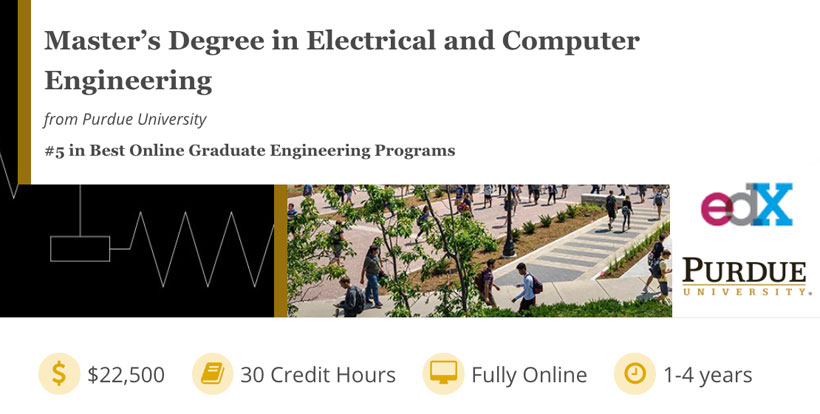
Is "MOOC-based degrees" the right name? Shouldn't we call this phenomenon "low-priced degrees", "online degrees at scale" or "self-paced degrees"? It's time to ask the experts. The pioneer of these programs, Zvi Galil, who disrupted the industry with the OMSCS, kindly explains to IBL News. "Our degrees are not exactly massive and not open. But they have the same pedagogy as MOOCs –they are broken into small pieces with quizzes to make sure students understand concepts before moving on. Also, they are much better pedagogically than the old fashioned, videotaped courses, and they include an extensive support system." Understood. Additionally, we could say that MOOCs sounds like a failed experiment. They didn't democratize education, nor thrill learners –who were eager to enroll but never to complete the courses. Moreover, MOOCs have drained financial resources and never resulted in a sustainable business model (ask universities on Coursera, edX and Udacity). What about referring to them just as Online Master's Degrees? This denomination may remind us of the incredibly expensive programs from U2 and other OPMs providers that attract a two digit number of students at most. We need to reflect on Zvi's motto of “accessibility through affordability and technology”. Another friend of ours, James Acevedo, Associate Director of Distance Learning at The New School, concludes: "I think a good name is still to come." "I prefer MOOC-based degrees, since not all self-paced degrees are necessarily MOOCs, and degrees at scale seems purely like a marketing term." Zvi, the genius behind the concept, admits: "I don’t have an idea as to how to replace the MOOC-based denomination". All right, MOOC-based degrees it is. For now.