Degreed–a Pleasanton, California-based startup that helps employers to connect employees to learning resources to master new skills– announced this month it raised $32 million in a Series C. This round, led by Owl Ventures, brings the total raised in funding to $182 million. According to the company, most of the new capital from this investment will be used to support its “new Career Mobility product". With over 220 corporate customers, the company's platform offers employees educational content in the form of courses, videos and podcasts, along with credentials and certificates. Degreed makes money through a monthly fee for clients and is free for employees. “We keep people skilled and employable; nobody should become irrelevant in the future because they lack the right skills,” said CEO Chris McCarthy. Degreed stated that the past six months have included unprecedented engagement from customers. Nearly one in seven Degreed accounts has been activated between April and May of this year alone. Founded in 2002, Degreed claims that it had connected more than 4 million people at over 250 organizations, including NASA and Cisco.
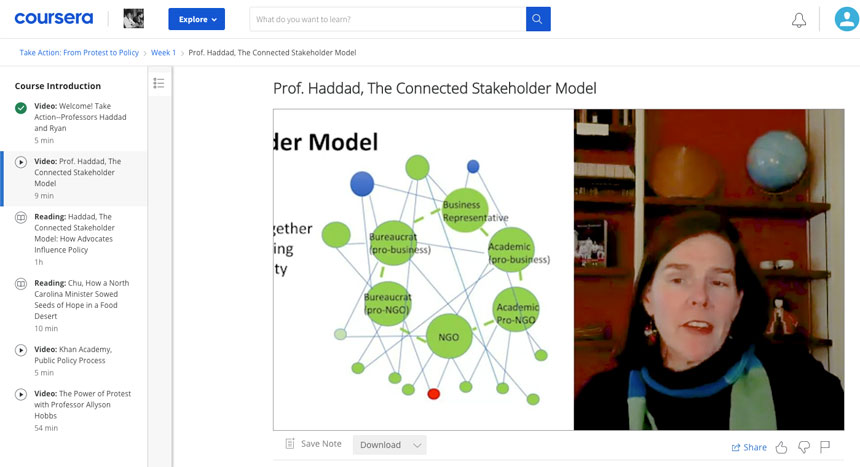
IBL News | New York Cheating and plagiarism on peer assignments prompted complaints among Coursera’s students, who blamed the learning company for not addressing the problem. A learner called “Chee Yang Ng” wondered why Coursera is not taking any action. “ They know academic misconduct is the major obstacle to the credibility of their courses, but why aren't they doing anything about it,” he said. The same frustration was shared by Luke Lau, who asked Coursera to handle “this case of academic dishonesty.” The discussion at Coursera started a week ago when a user opened a thread titled “How do we make certificate more creditable when there is a serious violation of intellectual property on Coursera?” claiming that his work was plagiarized. Chee Yang Ng said: “I cannot express how disappointed I am, not only on the violation of my intellectual property but also on the system failure of the platform that makes me question the quality of the education provided by the platform.” “Keep in mind that Coursera is a for-profit business, not an educational institution,” concluded Moocer. No one from Coursera answered, including the community manager of the forum. The discussion generated twelve replies. Plagiarism and cheating have been constant on MOOC platforms, although the problem has been kept inside doors.
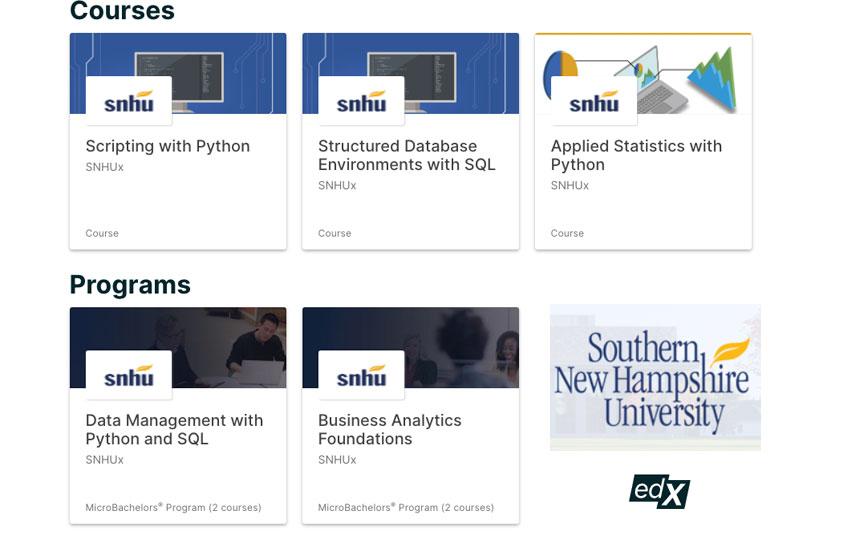
As a result of the impact of the COVID-19 pandemic, 56% of Americans are interested in pursuing additional education but are unable to due to the cost (29%) or other factors such as limited time (23%). In contrast, just over a quarter (26%) of Americans are more likely to pursue additional education because they are in search of a recession-proof job. These are the main conclusions of a survey conducted by edX in determining the impact of the pandemic on education. "Education has always been linked to improved job and earning potential, and with the pandemic leading us into a likely economic downturn, the cost is clearly top of mind," concluded Adam Medros, Co-CEO at edX. The survey shows that 45% are looking for a course that will help advance their career, while another 30% who are interested in taking a course to explore a new interest. edX.org offers stackable, modular credentials, such as MicroMasters Programs, Professional Certificate Programs, and MicroBachelors Programs.
Udacity announced this week a new Machine Learning Scholarship Program for Microsoft Azure. The scholarship begins with a two-month-long course, focused on completing prerequisites for the full Nanodegree program. A distinctive feature of this course, titled Introduction to machine learning on Azure with a Low-code Experience, is Azure Labs, in which students work with live Azure environments directly within the Udacity classroom. Learners aiming to earn one of up to 10,000 free spots are able to apply until June 30. The 300 top performers who successfully complete the introductory course will be selected for a scholarship to earn a four-month Nanodegree credential. The amount invested by Microsoft on this Udacity program to help train developers on its cloud infrastructure was not disclosed.
Noodle Partners, Jonh Katzman's created and managed OPM (Online Program Manager), announced this week it raised $16 million in Series B funding. The round was led by ValueAct Spring Fund and joined by the Lumina Foundation and existing investors. The New York City-based company –which has now raised more than $60 million–explained that it intends to use the funds to accelerate its growth. Noodle Partners claim that it has built 50 certificate or degree online programs for two dozen universities. The University of Tennessee, University of Virginia, The University of Michigan, Howard University, Tufts University, and Tulane University are among their customers. The controversial business area of OPM includes over 60 providers, although with different approaches. Noodle Partners' offer is based on providing some of the services to universities, outsourcing others to third-party firms. John Katzman himself –in the picture above– created the OPM space when he founded the currently leading traded company 2U, back in 2008. As reporter Tony Wan explained in edSurge.com this Tuesday, Noodle charges colleges $22,000 per month in management fees alone for the first program and $12,000 per month for each additional program. It also charges a per-credit-hour fee for each student who enrolls in an online program. These costs do not include fees paid for services from other providers in Noodle’s network. "Even according to Katzman’s optimistic cost estimates, it can take two years and $3 million to launch a new program from scratch—and another two years for that program to generate positive revenue. Noodle also offers to borrow money on behalf of the institution from MassMutual, the life insurance and financial service company, to cover the upfront cost of launching new programs."