
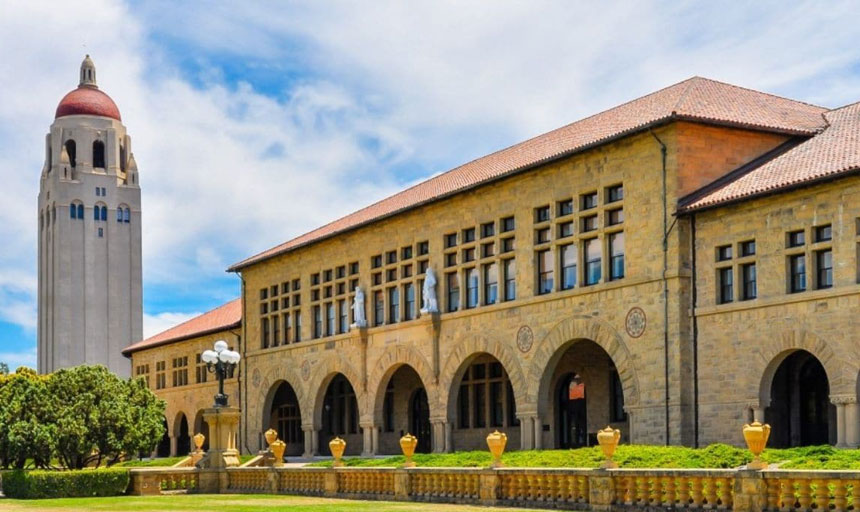







Each fall, over 400,000 students join private colleges. It means that one in five students chooses a private, nonprofit higher education over the public option. With this data in mind, AcademicInfluence.com released this month its rank of the 50 Best Private Colleges & Universities of 2021. Criteria in this ranking included full accreditation, operation as a nonprofit organization, and a minimum student body of 1,000 students. "These schools stand out due to their influential faculty and alumni, and for their many unmatched accomplishments in academics," explained Dr. Jed Macosko, Academic Director of AcademicInfluence.com and professor of physics at Wake Forest University. The following schools are featured in the ranking: Amherst College Bard College Barnard College Brandeis University Brown University Bryn Mawr College California Institute of Technology Carnegie Mellon University Case Western Reserve University The Catholic University of America Claremont McKenna College Columbia University Cooper Union Cornell University Dartmouth College Duke University Emory University Georgetown University George Washington University Hampshire College Harvard University Haverford College Johns Hopkins University Kenyon College Massachusetts Institute of Technology Morehouse College New School New York University Northwestern University Oberlin College Pomona College Princeton University Reed College Rice University Sarah Lawrence College Stanford University Swarthmore College Tufts University University of Chicago University of Pennsylvania University of Rochester University of Southern California Vanderbilt University Vassar College Washington University in St Louis Wellesley College Wesleyan University Williams College Yale University Yeshiva University The top 10 schools are: California Institute of Technology Harvard University Massachusetts Institute of Technology Stanford University University of Chicago Princeton University Columbia University Yale University Johns Hopkins University Duke University Behind the ranking is Fort Worth, Texas-based Influence Networks, which was created in 2016 with funding assistance from the Defense Advanced Research Projects Agency (DARPA). • Detailed Ranking of Top Schools
Certified on cannabis? The cannabis industry is now a fast-growing job-sector, "yet a significant shortage of qualified professionals exists," argues Western Washington University. This institution has started to offer non-credit certificates "with focused instruction from top experts in the cannabis industry." Its Professional and Continuing Education division has adopted four certificate programs in Business, Agriculture & Horticulture, Healthcare & Medicine, and Law & Policy. The programs—taught by expert instructors and developed in partnership with Green Flower education company—are offered 100% online. Each 24-week program costs $2,950 and includes three eight-week modules. Courses begin in March 2021. "After completing a certificate, students will have access to Green Flower's Employer Network–providing priority access to open positions, hiring contacts, and networking opportunities within multiple large national and regional cannabis companies," explained this university founded in 1893.
The Culinary Institute of America (CIA) announced this month an Online Master's Degree in Wine and Beverage Management. Enrolling for Fall 2021, this program follows the in-person wine and beverage management master's and the Online Master's in Food Business—both of which graduated their inaugural classes in September 2020. The Online Master's Degree in Wine and Beverage Management will be a 30-credit curriculum program and will immerse students in every facet of the business, from bottle to glass, exploring global wine business management; spirits, fermented, and non-alcoholic beverages; entrepreneurial innovation, marketing, distribution; and much more. The program will include three short residencies: two in Napa, CA―the heart of wine country―and one at the CIA's Hyde Park campus, in New York's Hudson Valley. "Today's beverage professionals need a foundation that goes beyond product knowledge," said Cathy Jörin, Senior Director of the CIA School of Graduate and Professional Studies. "Solid business acumen, an understanding of sustainability and world cultures, and the ability to innovate are vital. By bringing this program online, we're making it accessible to even more people, giving them an opportunity to develop these skills without putting their current careers on hold." To enroll, students must have a bachelor's degree. https://youtu.be/slg4-s_WRKg
Saylor Academy introduced Bitcoin for Everybody, a 12-hour, free certificate course to educate the world on bitcoin. According to the creators, the class is intended to "assist anyone seeking to harness this digital monetary network," said the creators. "Bitcoin for Everybody" takes the learner to the basics of this Bitcoin economics, investment, philosophy, and history, as well as its technical and practical components. [Course Syllabus Page] To earn a course completion certificate, the learner needs a grade of 70% or higher on the final exam. The delivery platform is Moodle.
Coursera announced yesterday a partnership with Howard University—a historically Black college and university (HBCU) which includes alumni such as Vice President Kamala Harris—aimed to empower black learners. "We are focused on creating social justice and anti-racism content and elevating Black voices in our instructor community," explained Betty Vandenbosch, Chief Content Officer at Coursera. Howard University will launch this year a course catalog on Coursera.org starting with Information Systems for Business and Linear Algebra for Data Science Specializations. Dr. Wayne A.I. Frederick, President Howard University, joined Coursera’s University Advisory Board, which approves all new university partners and provides strategic counsel. "These kinds of partnerships can help enhance opportunities for people of color by aligning their education with the needs of businesses," stated Dr. Frederick. In the same context, Coursera also announced several new social justice courses from other university partners, such as: Designing and Building Institutional Anti-Racist Spaces – Wesleyan University Take Action: From Protest to Policy – Wesleyan University Community Awareness: Police Brutality in the U.S. – University of Michigan Inclusive Leadership: The Power of Workplace Diversity – University of Colorado System Diversity and Inclusion for HR Professionals – University of California, Irvine Over 40 additional courses on topics such as overcoming bias, systemic racism, effective allyship, and diversity in the workplace wiil be likely to launch in the upcoming months. Also, learners can enroll in 20+ courses taught by Black instructors featured in the Black History Month collection. Together with Facebook Elevate, the learning company is offering up to 10,000 scholarships for the Facebook Social Media Marketing Professional Certificate in the platform. With Black Girls CODE, a nonprofit focused on bringing tech education to Black girls, Coursera is partnering to provide up to 2,000 girls with free access to its catalog.