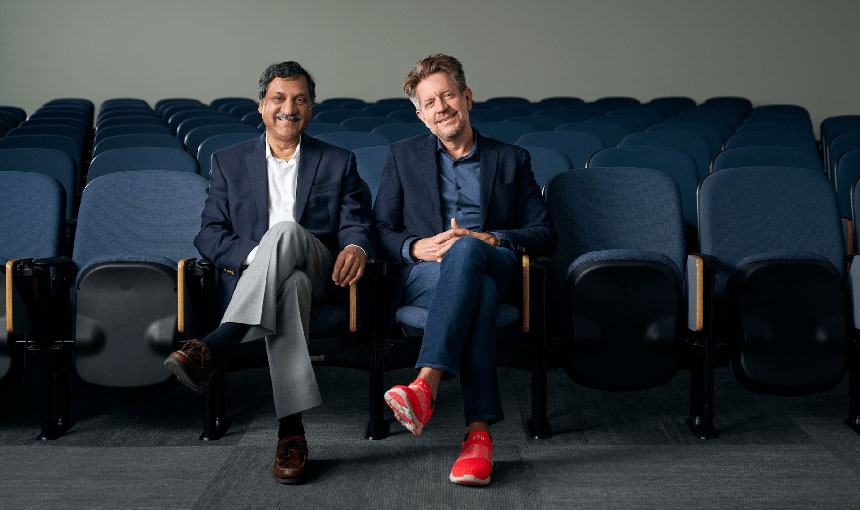
Training and career development EdTech startup Degreed raised $153 million in Series D funding valuing it at $1.4 billion. The investment, which was co-led by Sapphire Ventures and Riverwood Capital, will be used for global expansion and pursue acquisitions — the company said. Existing investors that participated in the round included Signal Peak Ventures, Owl Ventures, GSV Ventures, and AllianceBernstein Holding LP. To date, Pleasanton, California–based Degreed has raised $335 million. This big fundraising came along with the announcement of a new CEO: Dan Levin, former COO of Box will succeed Chris McCarthy — who steps down as CEO after eight years since the company was founded. He will remain seated on Degreed's Board of Directors. In 2020, Degreed more than doubled its active user base and increased its team by 50%, to 600 employees, across six continents. Skill recognizes skill. We’re excited to announce a fresh $153 million in Series D funding to help us solidify Degreed as the most innovative upskilling platform. Thank you to our clients, existing investors, and new investors for the incredible support. https://t.co/sl85UKGbOH pic.twitter.com/NZxZbayMgr — Degreed (@degreed) April 13, 2021
Getty Images will close at the end of April its acquisition — for an undisclosed amount — of Unsplash, a popular platform that reports over 100 million freely usable images downloaded per month, directly and through their partners via API. Started in 2013 as a Tumblr blog, Unsplash now offers over 2 million images free of cost. With 425 million paid images and videos including the world's deepest archive of historic photography, Getty Images plans to combine Unsplash with its iStock brand, increasing its dominance on online images' copyright business. According to Getty, "Unsplash will continue to maintain its free content model." The founders Mikael Cho, Luke Chesser, and Stephanie Liverani will continue leading the company as well, although will report to Craig Peters, CEO at Getty Images. "This partnership is an important milestone for Unsplash, but our mission of Photos for Everyone remains unchanged," ensured Mikael Cho. Despite these assurances, some voices expressed their concern that either Unsplash will change its image copyright polity or will be shut down.
The number of universities mandating the COVID grows every day. At least six more universities — Cornell University, Brown University, Nova Southeastern University, Fort Lewis College in Durango, Oakland University, St. Edward's University, and Roger Williams College in Rhode Island — have joined Rutgers in requiring students to be vaccinated for the upcoming fall term. Students with health issues or religious beliefs will be the only exceptions. In the case of Cornell, President Martha E. Pollack and Provost Michael I. Kotlikoff announced that it will require vaccination for students returning to Ithaca, Geneva, and Cornell Tech campuses for the fall semester. Cornell's students, faculty, and staff members are required to register their status through the university's Daily Check portal, adding proof of vaccination. The institution is planning for several possibilities for instruction, depending on the level of immunity achieved. With herd immunity, classes would return to in-person modality. Nova Southeastern University (NSU) in Florida said that it intends to resume full, in-person classroom learning for the fall 2021 semester. The requirement to be fully vaccinated for COVID-19 will be effective August 1st. Fort Lewis College in Durango, Colorado, with 3,500 students enrolled, announced to staff and students Friday that it will require students to get vaccinated, as well. It’s the first Colorado university to initiate a vaccine mandate. Yesterday, Oakland University in Rochester, Michigan, announced it will be mandating immunizations for student-residents to fall move on August 27.
Billionaire investor George Soros pledged last week a $500 million endowment to Bard College, a private liberal arts college in New York. The financier explained that "Bard has had an outsized impact, setting the standard in liberal arts education in prisons, in high school age students, and in the arts and in its international work." Bard College is one of two founding partners of the new Open Society University Network, a global network created with the Central European University in partnership with George Soros’s Open Society Foundations. Soros previously pledged $1 billion to help establish the Open Society University Network. Last summer, he committed $100 million to Bard his Open Society Foundation. "This grant to Bard — among the largest ever made to higher education in the United States – facilitates and strengthens Bard’s exemplary educational and social initiatives," said the school. In response to Soros' donation, Bard announced it has raised an additional $250 million from trustees, alumni, and supporters, and will raise another $250 million over the next five years. "This is the most historic moment since the college’s founding in 1860," said Bard College President Leon Botstein. "When this endowment drive is complete, Bard will have a $1 billion endowment, which will ensure its pioneering mission and its academic excellence for the future." Bard College enrolls 2,200 students at its main campus in New York's Hudson Valley and the Catskill Mountains. Its tuition costs are roughly $55,000 for a first-year student without room and board.
Coursera (NYSE: COUR) ended up its successful debut in Wall Street with a small gain of 1.73%, closing at $45.78 a share, it hit a high of $56.48 at 11:00 am. On Wednesday, the stock rallied 36%, until $45, giving the company a whopping valuation of $5.9 billion. On Tuesday, the IPO priced Coursera's shares at $33, allowing the educational company to raise nearly $520 million. The CEO at Coursera, Jeff Maggioncalda, predicted yesterday at Yahoo Finance that the stock price would stay even after the pandemic winds down. He said: "The world needs more access to high-quality learning. There will be a new normal that emerges. We don’t know what that will look like either in terms of how we work remotely versus in an office and how we will learn online and also on campus. But it’s pretty clear that the world will never be the same again and that online learning will be a big part of it." "So we really think about the long term, all the structural reasons why people will need to learn continuously through their lives to learn new skills as the world goes more digital," he added.