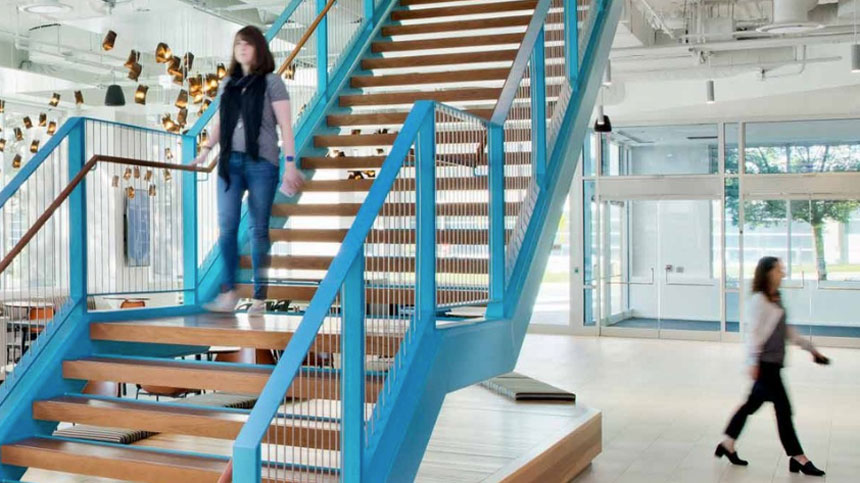
The Boston University's Questrom School of Business Online MBA on edX.org, once considered the "biggest experiment" ever run in the institution's history, was presented as a huge success this month. The first graduates [three of them in the picture above], who will get their degrees tomorrow, on May 22, 2022, say that the program has changed their lives. A total of 308 students are on track to graduate this May. At least one-third of them are expected to pick up their degrees in person. The graduates’ average age is 39, they hail from 43 nations, and a third of them are women. This Online MBA took nine-month gestation before its launch in the fall of 2020. The full cost of the degree was $24,000, a quarter of the typical in-person program price tag. Now, the Dean of the school says that "the experiment has exceeded our expectations on all fronts."
College tuition is going up again after the pause taken during the pandemic. This time, colleges and universities attribute the increase to rampant inflation. Currently, the inflation rate is 8.3 percent over the last year, according to data released by the U.S. Bureau of Labor Statistics this past Wednesday. It’s the highest rate since 1983. Some institutions, like Boston University, are pushing up prices to historic levels. Experts are afraid that when prices go up, they don’t go back down, as an article posted on Inside the Higher Education explains. In a letter to faculty and staff last week, Boston University President Robert A. Brown said that “by far, my greatest immediate concern is the impact of inflation on faculty and staff, our students, and the University." He added: "We have increased undergraduate tuition by 4.25% for the coming academic year, our largest increase in 14 years, following an increase of only 3.0% last year." "This increase does not keep pace with the current national rate of inflation and cannot fully offset the increased costs of University operations or fund salary increases that would fully mitigate the effects of inflation on the families of faculty and staff." However, as Inside of Higher Education reminds "the increase comes on the heels of the best fundraising year in history for Boston University, which brought in $225 million in philanthropic support in 2021." In December, the University of Virginia approved an 8.4 percent increase in undergraduate tuition and fees over the next two years. The Oregon Institute of Technology raised undergraduate tuition by 6.6 percent, or 7 percent, when including student fees. Syracuse University increased tuition by 4.5 percent. The Washington State University Board of Regents approved a 2.4 percent tuition increase for undergraduates this month. "These new tuition rates will help the university balance its annual budget in an inflationary environment while maintaining our commitment to accessibility and to value," UVA President, Jim Ryan, said in December 2021.
The number of Americans without a college credential but some college credits continues to increase. In July 2020, this segment was up 3.1 million from the 36 million in 2019. These data were issued by the National Student Clearinghouse's Research Center this week on its last annual progress report. The National Student Clearinghouse warned that "if these trends continue, a growing number of U.S. workers lacking education credentials risk being left behind in the twenty-first-century economy." The Some College, No Credential (SCNC) report series showed that California, Texas, New York, and Illinois account for more than a third of the nation's number. Seventy percent of the 60,400 completers obtained their credential from a public institution (two- or four-year). Private nonprofit four-year institutions had the highest perseverance rates (64.8%), while community colleges had the lowest (50.2%). Women outnumbered men in re-enrollment, credential earning, and perseverance. The share of re-enrollees among minority women was substantially higher than men (63.5% versus 34.6%). Associate degrees were the most common credential earned by Latinx SCNC students (42.5%), whereas Black students were most likely to have completed a certificate (42.7%). Asian and White students persevered at a higher rate than other groups.
The adoption of cryptocurrency and digital assets is arriving in higher education. A small college in the Boston area, Bentley University has become one of the first educational institutions in the U.S. to accept tuition fee payments made in Bitcoin (BTC), Ethereum (ETH), and the stablecoin USD Coin (USDC), the university announced on May 3. The university is partnering with the crypto exchange Coinbase to accept those three cryptocurrencies. "The move highlights Bentley’s long-standing commitment to leading the way in the early adoption of technologies changing the business world," said the university in a blog post. LaBrent Chrite, President of the university stated, "We’re proud to embrace this technology that our students are learning about, which will soon transform the global business landscape they’re about to enter." Last year, Bentley, located in Waltham, MA, used NFTs — non-fungible tokens or digital collectibles bought and sold with cryptocurrency on blockchains — to commemorate former women’s basketball coach Barbara Stevens’ induction into the Naismith Memorial Basketball Hall of Fame. Bentley was one of the first universities in the world to issue NFTs. More than 41 million Americans – 16 percent of U.S. adults — have invested in, traded, or used cryptocurrency, according to the Pew Research Center. The global cryptocurrency market is projected to more than double, from $910.3 million in 2021 to $1.9 billion in 2028, according to Fortune Business Insights.
Coursera, Inc. (NYSE: COUR) announced this month a new set of tech features, tools, and learning initiatives. Shravan Goli, Chief Product Officer at Coursera, listed on a blog post the following innovations, which will be launched this quarter: Personalized Schedules. Learners will be able to personalize their schedules in a course to automatically receive personalized course deadlines and goals. Data-Driven Deadlines. Students will receive deadlines within a course calculated based on how long it took to finish the item. Schedule Nudges. Learners get notified whether they are on track, ahead, or behind in their course with actionable next steps to keep them progressing efficiently. Lecture Summaries. Learners will see Machine-Learning generated summaries of key lecture videos. This will allow them to review prior course material, gain a quick understanding of a topic, and progress faster through a course. Adobe Guided Projects. Learners will be able to work with Adobe software to gain hands-on skills, build a portfolio, and prepare for a UX/Design role. Each learner who completes an Adobe Guided Project will receive a complimentary month of access to Adobe Creative Cloud. File Downloads from Labs to work locally and enhancements on auto-grading and auto-submission. Another remarkable innovation for educators is the possibility of migrating their existing content on edX and Open edX to their courses on Coursera via a new self-serve edX content ingestion tool. "Through this tool, university partner Dartmouth seamlessly moved 30+ courses to Coursera with minimal work for its program staff," explained Shravan Goli. Also in May, Coursera announced Career Academy intended for entry-level job-skills training. Recent platform innovations included: • LevelSets. A tool to help employees determine their proficiency in key skills and identify areas to focus on moving forward. Currently, there are 60+ new LevelSet assessments across Data Science, Technology, Marketing, and Finance to assess learner skills proficiency to establish a baseline and personalize content recommendations. • SkillSets. It provides content recommendations powered by data from millions of learners, choosing from a variety of skills and setting proficiency targets to establish measurable learning goals.