U.S. & World
Tuesday, September 15, 2026
US Politics & Legal Developments
In the realm of US domestic politics, Senate Minority Leader Mitch McConnell has made his return to the Senate following an extended medical absence due to a fall. His return marks a continuity in Republican leadership within the legislative branch after a period of recovery.
Concurrently, the nation's highest court, the Supreme Court, delivered a notable decision by rejecting former President Trump's efforts to impose restrictions on voting by mail. This ruling underscores the judiciary's role in safeguarding electoral processes and voter access, particularly concerning methods of voting that gained prominence in recent election cycles.
These developments highlight the ongoing dynamics within Washington, D.C., from the health and leadership of key political figures to the critical role of the Supreme Court in shaping national policy and electoral fairness.
Artificial Intelligence: Safety & Policy Debate
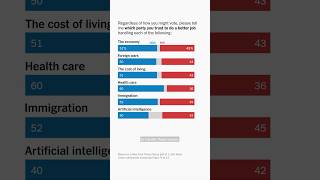
A significant debate is unfolding at the forefront of technological advancement concerning artificial intelligence. Top CEOs from the AI industry have collectively called for a slowdown in development, citing escalating safety concerns as the primary driver for a more cautious approach.
This call for prudence, however, stands in stark contrast to the views expressed by former President Trump, who has dismissed concerns about AI 'running wild' as a 'HOAX'. His statement introduces a political dimension to the discussion, potentially complicating efforts to establish unified regulatory frameworks or safety protocols.
The divergence in opinions between industry leaders, who are intimately familiar with AI's capabilities and risks, and political figures, underscores the complex challenge of governing and developing advanced technologies responsibly. This debate is poised to shape future policy, investment, and public perception of artificial intelligence.
International Relations & Global Security
Global security concerns are intensifying, particularly in the Middle East, where Iran claims to have destroyed a U.S. advanced drone over the Strait of Hormuz. This incident marks a significant escalation in regional tensions, highlighting the volatile geopolitical landscape and the potential for direct confrontation between international powers.
Meanwhile, humanitarian issues continue to demand global attention. Laos has issued a fervent call for international action to address the devastating impact of cluster munitions, emphasizing their long-term humanitarian consequences. This plea from a nation that has historically suffered from unexploded ordnance underscores the persistent challenges posed by conventional weapons in post-conflict zones.
These events collectively paint a picture of a world grappling with both immediate military flashpoints and enduring humanitarian crises, necessitating concerted diplomatic efforts and international cooperation to prevent further escalation and mitigate human suffering.
Global Economy & Industry Dynamics
The global economy is currently experiencing notable shifts in key sectors. Oil prices have surged by 3%, primarily attributed to an outage in a Saudi pipeline, a critical piece of energy infrastructure. This disruption immediately impacted global energy markets, signaling potential volatility and cost increases for consumers and industries worldwide. The situation is further complicated by reports of the Chief Justice of Pakistan (CJP) joining an MPSC protest, though the direct link to oil prices is less clear, it adds a layer of regional instability.
In the aviation industry, global airlines are collectively urging jet engine manufacturers to facilitate easier access for independent firms to provide reconditioned parts. This demand highlights a broader industry push for greater efficiency, cost reduction, and potentially a more sustainable supply chain for aircraft maintenance and operations.
These developments underscore the interconnectedness of global markets and industries, where geopolitical events, infrastructure failures, and supply chain demands can rapidly influence commodity prices and operational costs across diverse sectors.
International Governance & Regional Political Shifts
In Southeast Asia, Indonesia's political landscape has seen a significant shift with President Prabowo Subianto's appointment of Suahasil Nazara as the new finance minister during a recent cabinet reshuffle. This change in a key economic portfolio signals potential new directions in fiscal policy for one of the region's largest economies, reflecting the newly elected government's priorities and approach to economic management.
Meanwhile, on the global diplomatic stage, Uruguay's Foreign Minister has publicly commended India's effective leadership during the recent BRICS Summit. This praise specifically highlighted Prime Minister Modi's pivotal role, underscoring India's growing influence within multilateral forums and among emerging economies. Such diplomatic recognitions can bolster a nation's standing and capacity to shape global agendas.
These events illustrate the dynamic nature of international governance, from internal political adjustments in a major regional power to the evolving leadership roles within significant international blocs like BRICS, collectively shaping the future of global cooperation and economic policy.