Technology
Monday, August 10, 2026
AI Integration and Innovation in Learning Environments
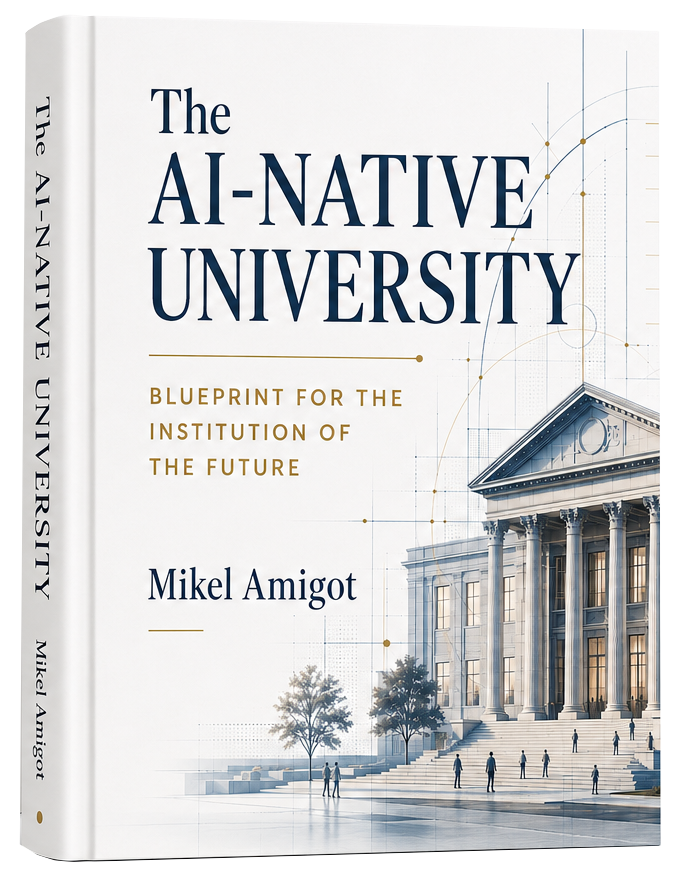
Educational institutions are increasingly embracing artificial intelligence, moving beyond theoretical discussions to practical implementation and innovation. The University of Louisville, for instance, has launched what it terms the first 'AI-native class,' signaling a significant shift towards integrating AI directly into core curricula and preparing students for an AI-centric future.
Beyond formal coursework, student engagement in AI creation is also being fostered. Events like Google's hackathon in Dublin challenge students to develop and pitch an AI application within a single day, promoting hands-on learning, problem-solving, and entrepreneurial skills in the AI domain.
These initiatives collectively highlight a proactive approach to AI, aiming not just to use AI as a tool, but to embed it within the learning process, empowering students to become creators and innovators in the rapidly evolving technological landscape.
Addressing AI Risks and Academic Integrity
The rapid proliferation of artificial intelligence tools in education has introduced significant challenges to academic integrity, prompting urgent responses from institutions. A notable concern is the rise of 'AI-enabled ghost student fraud,' where AI tools are used to facilitate cheating or generate unoriginal work, forcing IT leaders to develop new strategies to combat these sophisticated forms of deception.
In response to these threats, there is a pressing call for a comprehensive overhaul of traditional assessment methods in schools. Experts are advocating for immediate action to redesign evaluations to curb the misuse of AI, ensuring that students' work genuinely reflects their own understanding and skills rather than AI-generated content.
The imperative to 'act now' underscores the severity of the situation, as educators and administrators grapple with maintaining the credibility and fairness of the academic system amidst the evolving capabilities of AI. Safeguarding academic integrity remains a critical priority as schools adapt to the AI era.
Policy, Governance, and Societal Debate on AI in Education
The integration of artificial intelligence into school systems has ignited a significant debate, highlighting a critical need for clear policy and governance. Many educational institutions find themselves in a precarious position, attempting to formulate AI rules and guidelines without a complete understanding of the technology's long-term implications or 'destination.' This proactive, yet uncertain, policy-making reflects the rapid pace of AI development.
Adding to the complexity, a growing chorus of teachers and parents are expressing profound concerns about AI's presence in classrooms. A new petition has been launched calling for the suspension of both AI tools and 1:1 devices in schools, signaling a demand for a more cautious approach and a thorough evaluation of potential risks before widespread adoption.
This tension between technological advancement and societal readiness underscores the challenges facing education leaders. The urgent quest for effective governance must navigate public apprehension, pedagogical impacts, and ethical considerations to establish a sustainable and beneficial framework for AI in learning environments.
Critical Evaluation and Efficacy of AI in Education
Amidst the hype surrounding artificial intelligence, a critical perspective is emerging that questions its true efficacy in transforming education. There's a growing sentiment that AI alone 'won't fix American education,' suggesting that while AI offers tools, it is not a panacea for deep-rooted systemic issues and complex pedagogical challenges.
This skepticism extends to specific AI applications, such as AI tutors. A key question being raised is whether these AI-powered assistants possess the nuanced understanding to know 'when to help and when to hold back,' implying concerns about their ability to provide truly personalized, context-aware, and developmentally appropriate support that human educators can offer.
Ultimately, these critical viewpoints advocate for a balanced approach to AI integration, urging educators and policymakers to move beyond superficial adoption and instead rigorously evaluate AI's actual impact, its limitations, and its potential to genuinely enhance, rather than merely supplement, the learning experience.
Professional Development for AI Literacy in Educators
Recognizing the critical role of educators in navigating the AI-driven future, significant efforts are underway to provide professional development and training in artificial intelligence. These initiatives aim to equip K-12 teachers with the necessary knowledge and practical skills to effectively understand and integrate AI tools into their classrooms.
For instance, the University of Rhode Island, in collaboration with the Computing Education Alliance, is hosting a free AI professional learning conference specifically designed for K-12 educators. Similarly, the OpenAI Academy has taken a direct approach, training over 220 Phoenix educators in the practical application and use of ChatGPT, a prominent AI language model.
These programs underscore a collective commitment to fostering AI literacy among the teaching workforce. By empowering educators with hands-on experience and a deeper understanding of AI, the goal is to build confidence, facilitate informed pedagogical decisions, and ensure that AI can be leveraged responsibly and effectively to enhance student learning experiences.