Universities
Thursday, October 8, 2026
AI Integration and Engagement in Higher Education
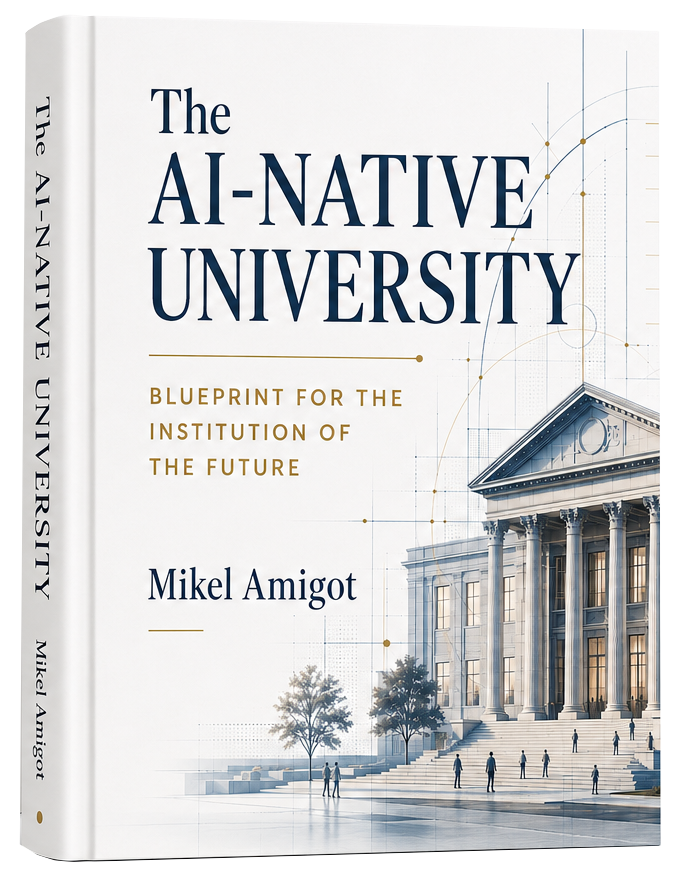
Universities nationwide are rapidly integrating Artificial Intelligence into their curricula, research, and campus life, signaling a proactive approach to preparing students and faculty for an AI-driven future. Colorado State University Global recently earned the 'AI-Engaged Campus Designation' from the Colorado Department of Higher Education, recognizing its commitment to AI education and application.
Furthering this trend, the University of Colorado Denver has opened its dedicated AI Hub, aiming to educate both students and faculty on the practical applications and theoretical underpinnings of this transformative technology. Similarly, the University of Texas has launched an Institute for the Future of Business, specifically designed to address the profound impacts of AI and technological changes on both business practices and educational methodologies.
These strategic moves are complemented by events like Cal Poly's upcoming AI Day on October 22, which serves as a platform for engagement and discourse on the latest advancements and applications of AI. Collectively, these initiatives underscore a widespread institutional commitment to fostering AI literacy, innovation, and readiness across the higher education landscape.
Student-Led AI Innovation and Entrepreneurship
College students are increasingly at the forefront of AI innovation, transforming classroom knowledge into practical applications and entrepreneurial ventures. A notable example comes from a competition dubbed 'America's Startup,' where college students are utilizing artificial intelligence to conceptualize and launch businesses directly from their dorm rooms, demonstrating the accessibility and power of AI as a tool for new enterprise.
Beyond entrepreneurship, students are also focusing on using AI to bridge technological gaps. An engineering student at Arizona State University, for instance, has developed an AI program specifically designed for schools with limited technology access. This initiative aims to democratize access to advanced learning tools, ensuring that educational institutions, regardless of their resources, can benefit from AI's capabilities.
These instances underscore a growing trend among the student body to not only understand AI but to actively apply it in creative and impactful ways, from building startups to developing solutions for underserved communities. Their efforts showcase the next generation's capacity to harness AI for both economic opportunity and social good.
Funding and Research in AI Development
The advancement of Artificial Intelligence and STEM fields in higher education is receiving substantial financial backing, underscoring the strategic importance placed on these areas by both government and research entities. Clark Atlanta University recently secured a significant $9.78 million grant from the Department of Defense.
This substantial funding is earmarked for dedicated research in AI and broader STEM disciplines. Such grants are crucial for fostering innovation, supporting cutting-edge projects, and developing the next generation of researchers and technologies.
The investment reflects a national interest in strengthening AI capabilities and STEM expertise through academic partnerships, positioning universities as key players in defense-related technological advancements and scientific discovery.
Challenges and Perceptions of AI in Academia
The rapid proliferation of Artificial Intelligence in education has sparked a complex array of student and faculty perceptions, often leading to what is described as an an 'uncomfortable reality' for higher learning institutions. Students are grappling with how AI tools like ChatGPT influence their learning processes, academic honesty, and the very nature of educational assignments, prompting widespread discussions across campuses.
These concerns are particularly acute in foundational academic areas, as exemplified by the call from The Daily Pennsylvanian to ensure Penn's Critical Writing Seminars remain 'AI-free.' This sentiment reflects a desire among some educators and students to preserve traditional intellectual development, particularly in skills like critical thinking and original composition, without the direct intervention of AI tools.
The ongoing debate highlights the tension between embracing AI for its potential benefits-such as personalized learning or efficiency-and safeguarding core educational values. Universities are thus faced with the challenge of developing policies and pedagogical approaches that navigate this evolving landscape, balancing innovation with academic integrity and the development of essential human skills.
AI Career Trajectories and Industry Impact
The burgeoning field of Artificial Intelligence is creating significant career opportunities, drawing talent from top academic institutions into leading roles within the tech industry. A compelling example is the journey of an individual who transitioned from the University of Southern California (USC) to a pivotal position at Microsoft, actively shaping the next era of AI innovation.
This career trajectory underscores the direct pipeline from advanced university programs in AI and related fields to high-impact roles in global technology companies. Professionals with strong academic foundations in AI are highly sought after to drive research, development, and strategic direction in an industry that is rapidly evolving.
Such career paths highlight the immense influence individuals can wield in defining the future of AI. Their work contributes to the development of new technologies, ethical frameworks, and practical applications that will impact societies worldwide, positioning them at the forefront of technological advancement.