U.S. & World
Sunday, October 25, 2026
Middle East Conflicts and Tensions
The Israeli-Palestinian conflict continues to escalate, marked by significant military actions and dire warnings of future violence. Israeli forces have reportedly commenced a multi-day assault in Hebron, leading to the displacement of families from their homes, indicating a heightened level of military engagement in the West Bank.
Concurrently, Hamas has issued an unusually blunt threat, cautioning Israel of another attack reminiscent of the October 7 incident. This warning underscores the persistent and severe security challenges facing the region, suggesting the potential for further large-scale confrontations.
The ongoing military operations and explicit threats from both sides highlight a deeply entrenched and volatile situation. The displacement of civilians in Hebron and the explicit warning from Hamas paint a grim picture of continued conflict, with significant humanitarian and security implications for the entire Middle East.
Regional Security and US Policy in the Middle East
The Middle East remains a focal point of geopolitical tension, with regional states grappling with security threats and the United States considering significant strategic moves. Jordan has declared three days of mourning following a deadly church attack, with King Abdullah II vowing "harshest retaliation," reflecting the severe impact of such incidents on national stability and public sentiment.
In parallel, former President Trump has indicated that the U.S. is contemplating a possible Sunday attack on Iran, or alternatively, aiming to reach a deal. This statement highlights the precarious balance of power and the potential for a major shift in the region's dynamics, underscoring the ongoing diplomatic and military considerations involving key global players.
These developments collectively portray a region under immense pressure, navigating both internal security challenges and the looming specter of international intervention. Jordan's strong reaction to the church attack and the U.S.'s deliberated approach towards Iran demonstrate the complex interplay of national security, regional stability, and international diplomacy in the Middle East.
French Domestic Unrest and Extremism
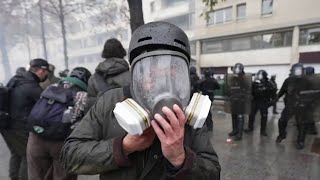
France is grappling with significant domestic unrest, as hundreds of thousands of citizens have taken to the streets in protest, leading to clashes in Paris and challenging President Macron's administration. More than 400,000 individuals participated in these nationwide demonstrations, reflecting deep-seated public discontent.
In anticipation of and response to these planned protests, French officials deployed a substantial force of 70,000 law enforcement officers, signaling the government's commitment to maintaining order amidst widespread civil disobedience. This significant security presence underscores the scale and potential volatility of the demonstrations.
Adding to the nation's security concerns, police investigating a deadly shooting near Paris discovered Adolf Hitler's "Mein Kampf" in the suspect's home. This finding suggests a potential link between domestic violence and extremist ideologies, raising further questions about internal security threats and radicalization within France. The confluence of mass protests, a robust state response, and the emergence of extremist links highlights a complex and challenging period for French domestic stability.
US Politics and International Diplomacy
The United States is navigating both internal political turbulence and significant international diplomatic efforts. Domestically, Leader Jeffries issued a statement condemning Donald Trump's "vile attack" on Ilhan Omar, highlighting ongoing partisan friction and the often-contentious nature of political discourse among high-profile figures.
On the international front, former First Lady Melania Trump announced a US-brokered temporary ceasefire in the Ukrainian city of Oleshky. This diplomatic intervention underscores the United States' continued role in attempting to de-escalate global conflicts and facilitate humanitarian pauses, even as internal political debates persist.
These events illustrate the multifaceted engagement of the United States, simultaneously managing sharp internal political disagreements and projecting its influence on the global stage through diplomatic initiatives. The contrast between domestic political condemnation and international peacemaking efforts reflects the complex and often contradictory nature of contemporary US policy and leadership.
Global Financial Markets
Global financial markets are experiencing significant shifts, with major indices showing diverging trends. Forecasts indicate a deepening selloff for the Nasdaq, signaling concerns among tech-heavy investors and potentially broader market anxieties.
Concurrently, the Dow Rally has reportedly stalled, suggesting a loss of momentum in what was previously a strong performing segment of the market. This pause in the Dow's upward trajectory, alongside the Nasdaq's decline, points to a period of increased volatility and uncertainty for investors.
The performance of the S&P 500, Nasdaq, and Dow indices collectively offers a snapshot of current economic sentiment. The combination of a deepening tech selloff and a stalled rally in industrial stocks suggests a cautious outlook for the near-term market, prompting investors to closely monitor economic indicators and corporate earnings reports.