U.S. & World
Monday, September 7, 2026
Global Geopolitical Developments
Global geopolitical landscapes are marked by both escalating tensions and strengthened diplomatic ties, as evidenced by recent international headlines. In a significant development, Iran claimed to have struck a US ship in the Strait of Hormuz, an assertion swiftly denied by the United States, highlighting the continued volatility in a crucial maritime chokepoint. This incident underscores the precarious nature of military interactions in strategically sensitive regions.
Further contributing to the complex global security environment, North Korea has reportedly deployed a new warship, touted as being 'capable of annihilating retaliatory strikes.' This move by Kim Jong Un's regime signals a potential escalation in its military capabilities and rhetoric, raising concerns among regional and international observers about stability on the Korean Peninsula and beyond.
In contrast to these flashpoints, diplomatic relations between India and France have reportedly reached new heights. Indian Prime Minister Narendra Modi affirmed the robust partnership, indicating a positive trajectory in bilateral cooperation across various sectors. This diplomatic success provides a counterpoint to the prevailing international tensions, showcasing the potential for constructive engagement between global powers.
Domestic Politics and Security
The domestic political landscapes in several nations are experiencing significant shifts and security challenges. In Germany, the far-right AfD party achieved a landslide victory in the key Saxony-Anhalt election, signaling a growing influence of nationalist and populist sentiments within European politics. This electoral outcome reflects a broader trend of political polarization and discontent among voters, reshaping traditional party dynamics.
Across the Atlantic, political security concerns were highlighted by an incident in Ohio, where an armed man reportedly charged toward a Democratic candidate for governor at a fair. Law enforcement quickly intervened, but the event underscores the increasing volatility and potential for violence in political campaigning. Such incidents raise alarms about the safety of public officials and the state of political discourse.
These developments collectively point to a challenging environment for domestic politics, characterized by both ideological realignments and heightened security risks. The rise of extremist parties and direct threats to candidates indicate a period of significant stress on democratic processes and public safety within political spheres.
Infrastructure and Transportation Incidents
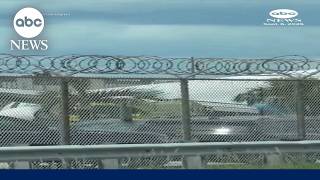
Recent incidents have underscored significant safety concerns within transportation and urban infrastructure, leading to tragic loss of life and disruption. In Miami, an Amazon cargo plane overshot the runway, resulting in the deaths of five individuals. The accident highlights the inherent risks in air freight operations and prompts investigations into aviation safety protocols and potential contributing factors such as mechanical failure or pilot error.
Concurrently, the fragility of urban infrastructure was tragically demonstrated in Delhi, where a building collapse claimed one life, left several feared trapped, and necessitated urgent rescue operations for three individuals. Such collapses often point to issues with construction quality, aging structures, or inadequate maintenance, raising critical questions about urban development standards and public safety in densely populated areas.
These separate but related incidents draw attention to the critical need for rigorous safety standards and continuous oversight across both high-stakes transportation sectors and foundational urban planning. The human cost of these failures serves as a stark reminder of the importance of preventative measures and robust emergency response systems to mitigate future tragedies.
Economic and Institutional Affairs
Significant developments in economic policy and institutional governance are shaping national trajectories. In a major move to bolster its financial sector, China is reportedly preparing capital injections totaling approximately $54 billion for its major state-owned banks and insurers. This substantial financial intervention underscores Beijing's commitment to maintaining stability within its vast financial system and supporting key economic pillars amidst global and domestic challenges.
Meanwhile, India's premier space agency, ISRO (Indian Space Research Organisation), firmly rejected 'completely baseless' reports regarding its privatization or a reduction in its role. The clarification from ISRO is crucial for maintaining public confidence and reinforcing the agency's strategic importance as a government-controlled entity in India's ambitious space program. Such statements are vital in dispelling misinformation that could impact national scientific and technological endeavors.
These two distinct but related headlines reflect how governments are actively managing their economies and strategic institutions. China's capital injection demonstrates proactive economic stabilization, while ISRO's rebuttal highlights the importance of governmental control over key strategic assets and the need for clear communication regarding institutional policy and future direction.
Natural Disasters and Environmental Impact
Indonesia has recently faced significant disruption due to a natural disaster, as the Anak Krakatau volcano erupted, prompting immediate and widespread cancellations of flights at Jakarta airport. The volcanic activity released ash and potentially dangerous gases, necessitating swift action to ensure public safety and prevent aviation hazards. This eruption underscores the ongoing geological volatility of the Pacific Ring of Fire region.
In response to the eruption and its potential environmental impact, authorities also took the precautionary measure of closing schools in affected areas. This decision aimed to protect students and staff from volcanic ashfall and other related dangers, highlighting the direct and immediate consequences such natural events have on daily life and public services. The closures reflect a broader strategy to mitigate risks associated with volcanic activity.
The events surrounding Anak Krakatau serve as a stark reminder of nature's power and the necessity for robust emergency response and preparedness systems in regions prone to such disasters. The disruption to air travel and education illustrates the far-reaching impact of volcanic eruptions on a nation's infrastructure and its citizens' routines.