Universities
Sunday, November 1, 2026
AI Curriculum Development in Higher Education
In response to a burgeoning demand for specialized expertise, US higher education institutions are rapidly expanding their offerings in artificial intelligence. Universities across the nation are accelerating the development of new AI curricula and launching specialized programs designed to equip students with the skills necessary for a rapidly evolving job market.
This proactive approach by American universities aims to address the significant industry need for professionals proficient in AI. The focus is on creating robust academic pathways that range from foundational courses to advanced degrees, ensuring a steady pipeline of talent capable of innovating and applying AI technologies across various sectors.
The expansion reflects a strategic shift within academia to align educational objectives with technological advancements, preparing a new generation of graduates to lead in the AI-driven future.
AI's Integration and Pedagogical Challenges in Higher Education
US higher education is currently grappling with the profound challenges of integrating artificial intelligence into its core pedagogical practices. Institutions are not merely adding AI courses but are fundamentally rethinking how teaching and learning occur in an AI-permeated environment, facing complex questions about methodology and curriculum design.
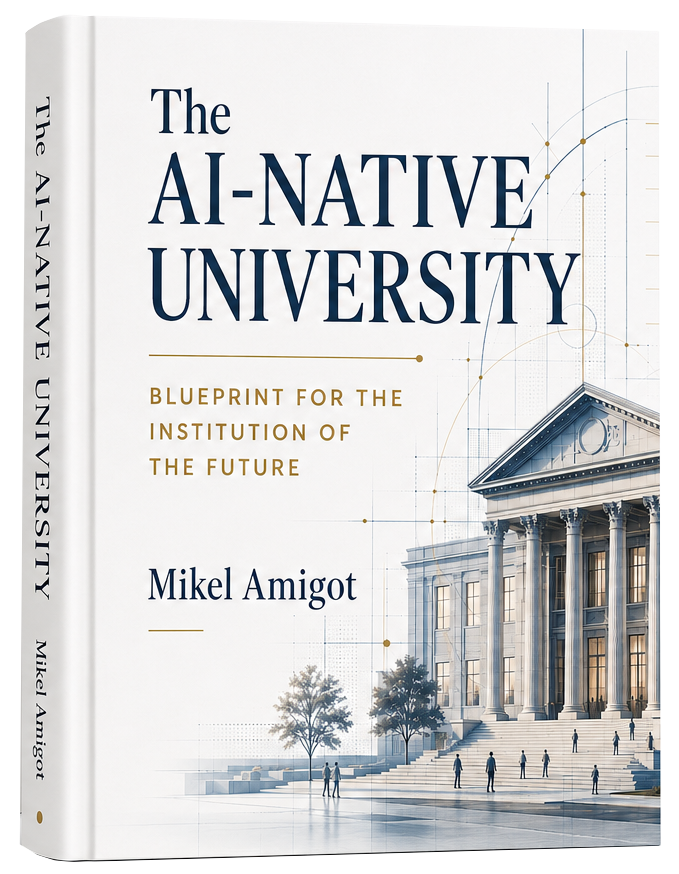
A significant development in this area is the emergence of blueprints for an 'AI-Native University.' These frameworks aim to guide institutions towards a future where AI is seamlessly integrated into every facet of academic life, from administrative functions to classroom instruction, posing both opportunities and considerable implementation hurdles.
The integration process necessitates a critical re-evaluation of established educational models, prompting universities to innovate and adapt their approaches to ensure that AI serves to enhance, rather than compromise, the quality and integrity of higher learning.
AI's Broader Impact on Educational Values and Purpose
Artificial intelligence is prompting a fundamental re-evaluation of the purpose and value of schooling, challenging established norms within US universities. The impact of AI on educational value and student behavior is under intense scrutiny, as educators and administrators ponder how this technology reshapes learning outcomes and academic integrity.
Questions are being raised about whether AI is 'overthrowing the purpose of schooling,' pushing institutions to confront the core mission of education in an era where automated tools can perform complex tasks. This introspection extends to examining how students interact with AI, influencing their learning processes and potentially altering traditional measures of academic achievement.
The debate underscores a critical juncture for higher education, necessitating a comprehensive discussion on adapting educational philosophies and practices to ensure that schooling remains relevant and effective in preparing students for a future increasingly defined by artificial intelligence.
AI and the Integrity of Electoral Politics
The burgeoning influence of artificial intelligence on electoral politics is raising significant concerns about the integrity of democratic processes. A new book by a Grinnell College professor delves into how AI is actively reshaping electoral politics, highlighting its potential to transform campaigns and voter engagement.
Compounding these concerns, a project by Wesleyan University has identified a troubling trend: AI-generated campaign ads are raising alarms about their potential to mislead voters, particularly ahead of crucial midterm elections. The ability of AI to create highly convincing, yet potentially deceptive, content poses a direct threat to informed public discourse and fair electoral outcomes.
These developments underscore an urgent need for strategies to counter misinformation and ensure transparency in political advertising, as AI's growing sophistication challenges the foundational principles of democratic elections and voter trust.
Ethical, Privacy, and Institutional Concerns in the Age of AI
The rapid advancement of artificial intelligence has brought to the forefront a range of critical ethical and institutional concerns. An upcoming radio broadcast, featuring an educator, is scheduled to discuss AI's profound impact on individual privacy and autonomy, highlighting the necessity of safeguarding personal data and decision-making in an AI-driven world.
Beyond these societal ethical discussions, AI is also precipitating specific institutional challenges within academia. A notable instance involves a former Dartmouth provost, who claims not to have received an adequate opportunity to respond to 'AI claims.' This incident points to potential procedural and fairness issues that can arise within university administrations as they navigate the complexities introduced by AI, possibly related to academic integrity or internal investigations.
Together, these developments underscore the dual challenge of addressing both the broad ethical implications of AI for society at large and the specific governance and fairness issues that emerge within institutions attempting to manage its pervasive influence.