China Will Help Countries to Build AI Capabilities by Using Open-Source Technology
July 18, 2026
IBL News | New York
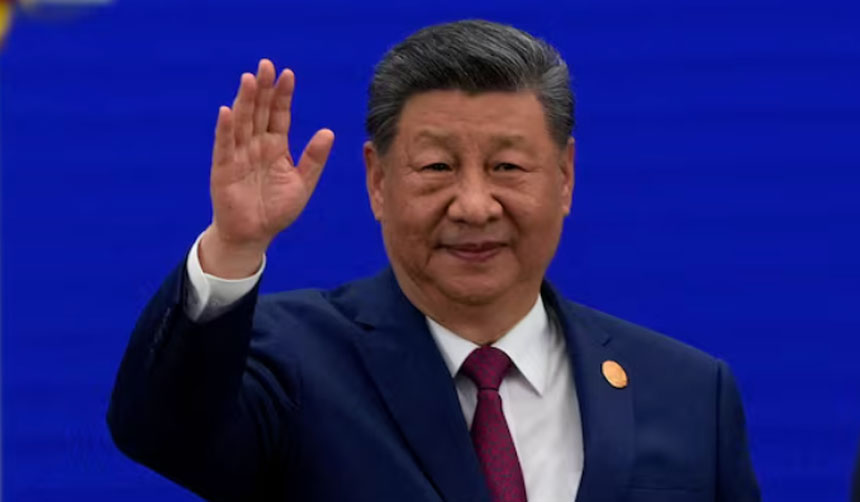
Chinese President Xi Jinping on Friday articulated China’s strategy to lead the AI race by dominating open-source technology, positioning his country as an alternative to the U.S. and its proprietary systems such as OpenAI and Anthropic.
In a speech to the opening ceremony of the World Artificial Intelligence Conference (WAIC) in Shanghai, Xi urged countries to seize the “historic opportunity” of open-source AI and pledged to help developing nations build AI capabilities, challenging U.S. influence and warning against the emergence of “new historical injustices from unequal access to the technology.”
The Chinese President framed its open-source models as a global public good.
At a pivotal moment in the race for technological leadership, China says that it understands that AI leadership is not just about building the most capable models. It is about shaping the rules, norms, and institutions that will govern the development and use of AI worldwide.
Beijing is bringing 29 countries along as signatories to a new China-backed AI organization, giving it a growing platform to shape international standards and extend its influence worldwide. In this regard, China will provide AI training and develop AI cooperation centers with BRICS, ASEAN, Latin American and African Union countries, Xi said, aligning its AI diplomacy with major Global South blocs where Beijing already carries significant influence. [Meanwhile, Washington has brought together 35 countries behind its AI Opportunity Statement].
Comparing AI’s significance to the invention of the steam engine and electricity, Xi outlined a vision in which China shares AI technology and expertise with countries across the Global South while leading global efforts to establish standards for the emerging technology.
Observers say that China is seeking to build “another order” by “pooling the strength of all humanity and all countries to build an open-source, all-factor AI ecosystem.”
The WAIC conference underlined the shifting AI landscape, with Chinese open-weight AI models making rapid gains
Xi also called for AI systems to remain under human control and urged countries to establish early-warning and emergency-response mechanisms to manage AI risks, in his clearest remarks to date on AI safety.
He further urged measures to guard against loss-of-control scenarios, warning of the dangers posed by autonomous AI systems that could evade human oversight and control.
Beijing-based startup Moonshot AI on Friday unveiled Kimi K3, which it described as the world’s largest open AI model by parameter count.
Kimi K3 may be an important inflection point for AI. Potentially negative for Anthropic and OpenAI while being net positive for essentially every other company in the world. I mean that very literally. Although the real “Sputnik moment” would be an open-source frontier model that… pic.twitter.com/tdAkU4oRgo
— Gavin Baker (@GavinSBaker) July 17, 2026
Discover more
IBL News is funded by the New York-based, family-owned company ibl.ai. Our stories adhere to the highest ethical standards in journalism and are available to news syndication agencies.