An AI Model Finds a Major Security Bug in Java, a Widely Used Software in Corporate America
November 18, 2026
IBL News | New York
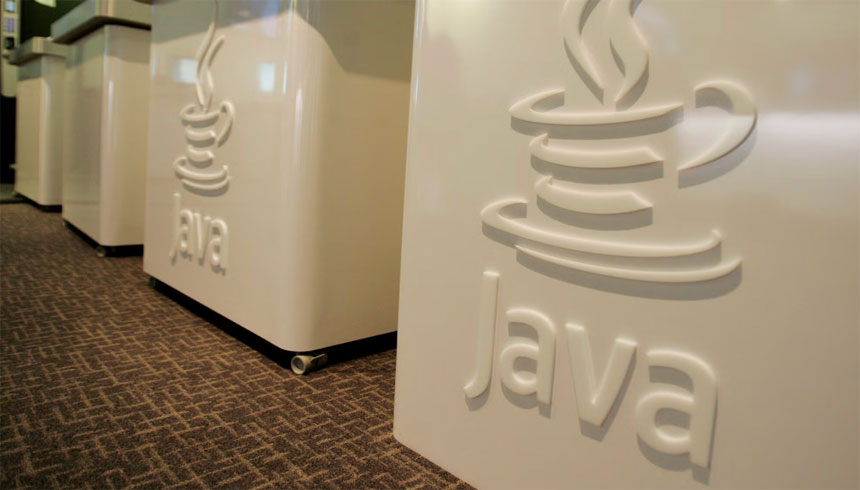
Security company Calif, a tech start-up, said it used OpenAI’s recently released GPT-6 Cyber model to uncover a critical bug in the Java programming language, which government agencies and nearly all Fortune 500 companies use heavily, according to a report in The New York Times yesterday.
The undisclosed discovery shows AI’s ability to find major security holes in widely used software, revealing the reality agencies and corporations face as AI identifies flaws and vulnerabilities in code so rapidly that cybersecurity professionals struggle to keep up.
The Java flaw exposed vulnerabilities in systems used by banks, hospitals, the aviation industry, technology giants, and government agencies, including those with national security missions. The Java discovery could let a hacker remotely access sensitive internal systems.
Bruce Dang, a senior researcher at Calif., along with his colleagues, has worked in recent days to coordinate with all government agencies in the intelligence-sharing alliance known as Five Eyes — which consists of the United States, Canada, Australia, New Zealand and Britain — and major vendors in the private sector, including Google and Microsoft.
“Practically speaking, all major companies” will be affected by the bug, he said.
Oracle, the owner of the Java trademark and provider of commercial Java licenses, released a software patch Tuesday.
This bug follows a cascade of seemingly independent disruptions in recent days, such as Chase’s banking interruptions, a nationwide grounding of flights, and outages of Microsoft and Workday products
The Java vulnerability is the second major bug Calif has unearthed in the past few weeks with the aid of OpenAI models. Last month, it discovered security flaws in PHP, a programming language estimated to power 70 percent of websites and apps on the internet.
The PHP disclosure sparked fears worldwide of major disruptions for consumers and businesses and a frantic scramble by companies to patch PHP before hackers could pounce. Government agencies, including the N.S.A., warned businesses to take websites offline if they could not immediately deploy a patch.
Among the most significant findings, Calif showed it could use this bug to break into Keycloak, a widely used authentication and login system. Keycloak protects thousands of organizations, including CERN, Hewlett Packard, UnitedHealthcare and NASA.
Quang Luong, a security researcher from Calif, discovered the bug in Java’s base64 decoder, a common algorithm that translates binary computer data into a legible palette of text, including lowercase and uppercase letters, numbers, and punctuation. On certain computers, researchers found that Java encounters a bug when it tries to decode 64 “A” characters followed by one equal sign:
AAAAAAAAAAAAAAAAAAAAAAAAAAAAAAAAAAAAAAAAAAAAAAAAAAAAAAAAAAAAAAAA=
This bug, called Java4Shell, causes Java to execute code by tampering with a section of computer memory, which typically makes the program crash immediately. With the help of AI, Calif researchers demonstrated that they could corrupt data by carefully arranging the memory — a technique called “heap grooming” — granting them full unauthorized access to the underlying system.
The New York Times independently verified Calif’s discovery after the start-up shared proof-of-concept details about the attack. The successful test took less than an hour.
This week, the F.B.I. issued an alert warning that hackers were using new autonomous AI hacking tools to target government agencies and businesses worldwide.
Discover more
IBL News is funded by the New York-based, family-owned company ibl.ai. Our stories adhere to the highest ethical standards in journalism and are available to news syndication agencies.